
Last updated September 3, 2026
Seasonal Chimney Cleaning Care for Bridgeport: Year-Round Homeowner’s Guide
The worst chimney damage Anthony sees in Bridgeport doesn’t come from heavy winter use — it comes from spring moisture trapped in a flue that was closed up dirty, sitting through a humid Connecticut summer. After eight years of inspecting chimneys across Black Rock, Brooklawn, and the East Side, we’ve learned that homeowners who treat chimney care as a single “before winter” sweep are consistently behind the damage curve. Bridgeport’s coastal climate creates four distinct chimney stress periods, each with its own maintenance demands. This complete guide to chimney cleaning in Bridgeport breaks down exactly what your chimney needs in every season — and why the work you do in May and June matters more than the work you do in October.
Quick Answer
Seasonal chimney care in Bridgeport means four distinct maintenance windows: spring inspection and moisture remediation (May–June), summer humidity protection for liner materials (July–August), fall pre-heating sweep and cap checks (September–October), and mid-winter performance monitoring (January–February). Homeowners who follow this chimney cleaning and sweep maintenance checklist for Bridgeport homeowners prevent the freeze-thaw damage and liner deterioration that drive costly repairs in coastal Connecticut.
Table of Contents
- Spring: The Maintenance Window Most Bridgeport Homeowners Skip
- Summer: How Humidity Attacks Different Liner Materials
- Fall: Pre-Heating Preparation Beyond Scheduling a Sweep
- Winter: Mid-Season Performance Indicators You Can’t Ignore
- Common Mistakes to Avoid
- When to Call a Professional
- Frequently Asked Questions
- The Bottom Line
Spring: The Maintenance Window Most Bridgeport Homeowners Skip
May and June are the most important months for chimney health in Bridgeport — and the most neglected. After a heating season of active use, your flue is coated with creosote, soot, and combustion byproducts. When you close the damper and forget about it until October, that residue traps moisture from Bridgeport’s spring rains and rising humidity. By September, you’re looking at glazed creosote that’s harder to remove, corroded metal components, and odor problems that linger into fall.
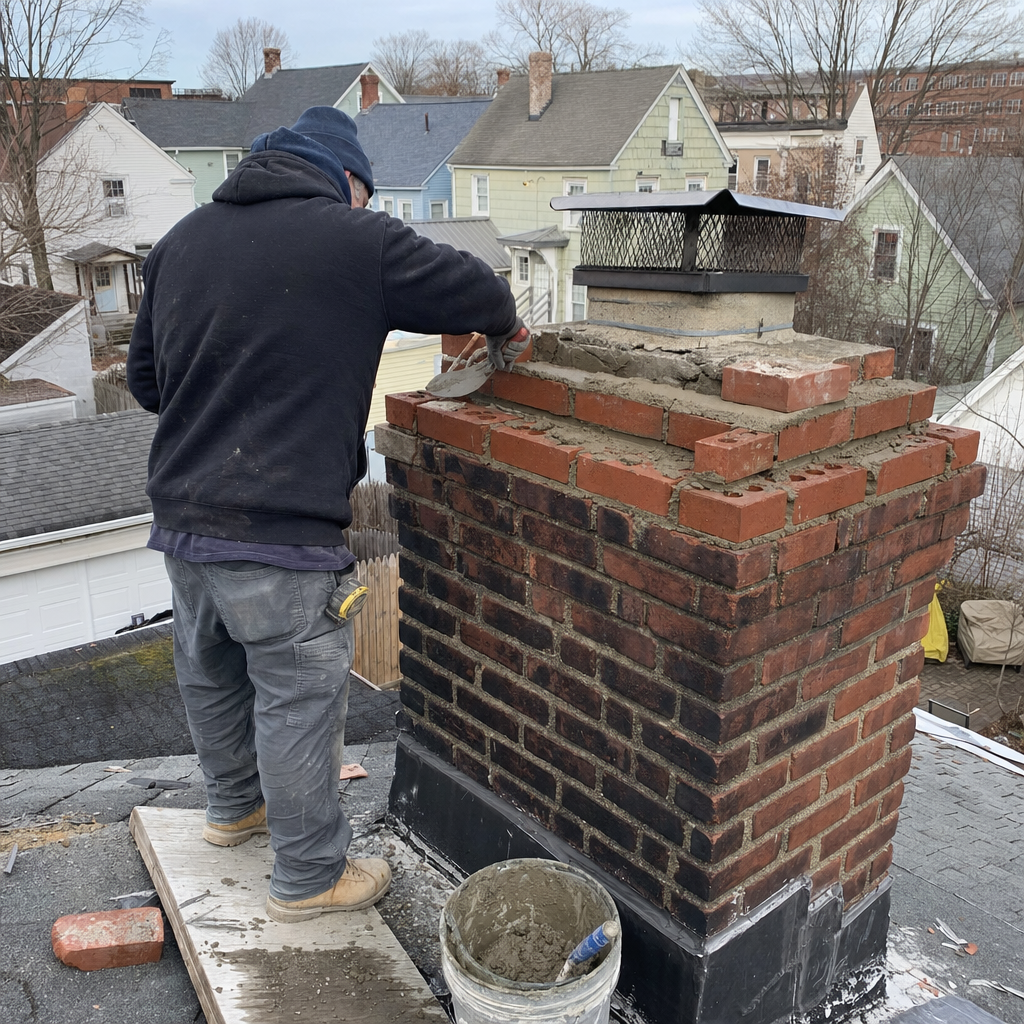
Here’s what we do differently: Anthony leads every spring inspection with a specific protocol for post-heating-season chimneys in coastal Fairfield County. The process starts with a Level 1 inspection, visual scan of the flue interior, and documentation of creosote buildup type and volume. We check the chimney crown for winter freeze-thaw cracking — common in Bridgeport’s climate where temperatures swing above and below freezing dozens of times per season. We inspect the cap and screen for corrosion, since salt air from Long Island Sound accelerates metal fatigue. And we evaluate the damper seal, because a damper that doesn’t close tightly in spring becomes a humidity highway all summer.
The neighborhoods we work in tell the story. In Black Rock, where many homes date to the 1920s and 1930s, original clay tile liners show accelerated spalling when spring moisture penetrates winter-damaged mortar joints. In newer Brooklawn construction, we’ve seen stainless steel flex liners corrode at the collar connection when condensation sits unchecked from April through August. The repair cost difference between a May inspection and an October discovery is typically $400–$1,200.
Spring Checklist:
- Schedule Level 1 inspection within 30 days of final fire
- Have creosote professionally removed while it’s still “sooty” stage (easier cleaning, lower cost)
- Photograph crown condition for year-over-year comparison
- Test damper seal with smoke pencil or incense
- Verify cap is secure and screen mesh is intact (no gaps larger than ¾ inch)
- Address any repairs before humidity peaks in July
From annual sweep to full rebuild, catching issues in spring keeps options open. A crown with hairline cracks in May can be sealed with professional-grade repair material. That same crown in October, after summer expansion cycles, may need complete replacement.
Summer: How Humidity Attacks Different Liner Materials
Bridgeport’s summer humidity averages 70–75%, with coastal fog and dew points that keep chimneys damp for days. How that moisture affects your flue depends entirely on what your liner is made of — and most homeowners don’t know which type they have.
Clay Tile Liners: These are standard in Bridgeport homes built before 1980. Unglazed terracotta absorbs moisture like a sponge. When humidity penetrates the flue, the clay swells slightly, stressing mortar joints. Repeated wet-dry cycles cause “spalling” — the surface flakes off, exposing porous interior. We’ve pulled liner sections in August where a spring-damaged tile had lost ⅜ inch of wall thickness. The danger isn’t immediate collapse; it’s that degraded tiles can’t contain a chimney fire, and they allow creosote to penetrate into the masonry shell where it becomes nearly impossible to clean.
Stainless Steel Flex Liners: These perform better in humidity but have a vulnerability most installers don’t mention: the collar and termination connections. In Bridgeport’s salt air, 316Ti stainless still corrodes at connection points where dissimilar metals meet or where condensation pools. We use DuraFlex and Olympia Chimney products specifically for their seam-sealing technology, but even premium liners need summer inspection of the top termination. A loose or corroded clamp in July becomes a water entry point by September.
Cast-in-Place Liners (Thermocrete, HeatShield): These are increasingly common in Bridgeport historic homes where relining is necessary but space is tight. The cementitious surface is less porous than clay, but it’s not waterproof. Summer humidity combined with residual creosote acidity creates a slow chemical degradation. HeatShield’s cerfractory formula resists this better than generic refractory mixes, which is why we specify it for coastal Connecticut installations.
Summer Maintenance Tasks:
- Run a dehumidifier in the basement if your chimney base is below grade (common in Brooklawn and East End homes)
- Visually inspect the exterior for vegetation growth — roots hold moisture against masonry
- Check the attic around the chimney penetration for condensation stains
- Leave the damper cracked open ¼ inch if the flue was cleaned in spring; sealed dampers trap stagnant humid air
- Schedule any planned relining work — summer is optimal for cure times on cast-in-place installations
Eight years, one specialty: we’ve tracked liner failure patterns across hundreds of Bridgeport inspections. The homes with proactive summer monitoring average 14 years between major liner work. The “October-only” homes average 6 years.
Fall: Pre-Heating Preparation Beyond Scheduling a Sweep
Every chimney company in Fairfield County advertises fall sweeps. Here’s what the ads don’t tell you: the sweep is only one item on a pre-heating checklist, and in Bridgeport’s climate, timing matters more than most places. Before scheduling, review chimney cleaning permits, codes & inspections in CT: what you need to know.
The September Rush Problem: By mid-September, every reputable sweep in Bridgeport is booked two to three weeks out. But early October often brings the first cold snap — we’ve seen temperatures drop to the 30s by October 10th. Homeowners who delayed scheduling face a choice: light a fire in an uninspected chimney, or run the furnace for two weeks while waiting. Neither is ideal.
Anthony’s Fall Protocol: We start fall Chimney Cleaning & Sweep appointments in early September, working outward from the coast where salt exposure accelerates summer damage. Each appointment includes:
- Pre-sweep inspection: Check for animal nesting (squirrels, raccoons, chimney swifts — all active in Bridgeport’s wooded neighborhoods through late September)
- Mechanical sweep with HEPA containment: We don’t blow soot into your living room. Our vacuum systems are sealed to the fireplace opening.
- Smoke chamber and damper cleaning: The area above the damper collects 40% of total creosote in many systems — most sweeps skip it or can’t reach it.
- Exterior cap, crown, and flashing inspection: Post-summer condition assessment with photo documentation
- First-fire guidance: Specific to your appliance type and wood species
What to Check Before Your First Fire:
Even if you’ve already scheduled a sweep, do these checks in late September:
- Open the damper fully and look up with a flashlight — any visible debris, soot falls, or light gaps around the flue indicate problems
- Smell for mustiness or animal odor; both mean entry points that need sealing
- Check the firebox for cracked or missing firebrick — thermal shock from first fire will expand small cracks
- Verify your carbon monoxide detector is less than 7 years old and has fresh batteries
- Inspect visible exterior masonry for new cracks or white efflorescence (salt deposits indicating moisture migration)
We use Gelco caps and Famco termination products for fall replacements because their stainless specifications hold up in Bridgeport’s coastal exposure. Hardware-store caps typically fail within three seasons here.
800+ homeowners have reviewed us, and the fall feedback we value most isn’t about the sweep itself — it’s about catching the blocked flue, the deteriorated connector pipe, the cracked heat exchanger that would have sent carbon monoxide into the house on first fire.
Winter: Mid-Season Performance Indicators You Can’t Ignore
Once heating season is underway, most homeowners assume the chimney is “handled.” But mid-winter is when hidden problems surface as performance changes — and recognizing them early prevents emergency shutdowns on the coldest nights.
Indicator 1: Smoke Behavior Changes
If smoke begins backing up into the room when it didn’t before, don’t just open a window. In Bridgeport’s dense neighborhoods — particularly the West End and South End where homes are close together — downdraft can worsen when adjacent buildings alter wind patterns. But persistent smoke backup usually means creosote buildup has narrowed the flue, or the chimney cap is iced over. We see this most in January after two months of daily firing.
Indicator 2: Unusual Odors
A clean chimney shouldn’t smell like a campfire when not in use. Mid-winter odors mean moisture is mixing with creosote — often from a failed crown or cap that let snowmelt enter. The smell intensifies when the furnace or water heater draws air through the house, pulling chimney air into living spaces.
Indicator 3: Soot Accumulation on Interior Surfaces
Blackening on mantel, surround, or nearby walls indicates incomplete combustion — the fire isn’t getting enough air, or the flue isn’t drafting properly. In Bridgeport’s older housing stock with original windows, modern weatherstripping can make homes so tight that fireplaces starve for combustion air. We evaluate this during fireplace service calls and can specify outside air kits where appropriate.
Indicator 4: Water in the Firebox
Any water visible on firebrick or the hearth during winter is an emergency — it means a significant breach in the chimney’s weather protection, and freeze-thaw will destroy masonry rapidly. We’ve seen fireboxes with ½ inch of ice buildup after a single cold snap following rain.
Indicator 5: Changed Burn Pattern
Wood that previously burned cleanly now smolders, or coals persist longer than usual. This can indicate restricted airflow from partial blockage, or it can signal that your wood supply has absorbed moisture from Bridgeport’s winter humidity. Properly seasoned hardwood should read below 20% on a moisture meter.
What You Can Do Mid-Winter:
- Keep a fire log of unusual events — helps diagnose patterns when you call
- Don’t attempt to clean or inspect the flue yourself during active use season — creosote is most flammable when disturbed
- Reduce burn rate if you notice any performance change — smaller, hotter fires produce less creosote than smoldering loads
- Monitor carbon monoxide detector readings if your detector shows peak levels
From annual sweep to full rebuild, mid-winter problems escalate fast. A crown leak in January can destroy a firebox by March. Anthony leads every emergency call personally — you’ll get the person responsible for the business, not a subcontractor pulled from another trade.
Common Mistakes to Avoid
- Closing the damper immediately after the last spring fire. Trapping combustion gases and moisture in a sealed flue creates acidic condensation that attacks metal components all summer. Wait 24 hours, then leave the damper cracked until inspection.
- Using “chimney cleaning logs” as a substitute for mechanical sweeping. These products loosen creosote but don’t remove it — the debris falls to the smoke shelf where it becomes a fire hazard and restricts airflow. We’ve found 6-inch deposits behind logs that homeowners thought were “cleaning” their chimneys.
- Ignoring the chimney cap because “it looks fine from the ground.” In Bridgeport’s coastal environment, cap deterioration starts at the mesh and mounting flange — invisible from below. A failed cap admits rain, animals, and debris that cause exponentially more damage than the cap replacement cost.
- Assuming a gas fireplace doesn’t need inspection. Gas appliances produce corrosive condensation and can block with bird nests or deteriorated vent connectors. We service vented gas fireplaces throughout the North End and Stratford border areas where they’re common in 1960s–1980s construction.
- Waiting for visible exterior damage before calling. By the time you see interior wall staining or exterior brick spalling, water has typically been entering for two to three seasons. Early intervention preserves the chimney structure; delayed response often requires partial rebuild.
- Hiring a general handyman for chimney work. Chimney systems involve combustion science, structural masonry, and local code compliance. We’ve corrected handyman “repairs” that blocked flues, used non-rated materials, or violated clearance requirements — corrections that cost 3–4× the original “savings.”
When to Call a Professional
Call for immediate inspection if you experience smoke backup, water in the firebox, carbon monoxide detector activation, or sudden odor changes. Schedule proactive service if it’s been more than 12 months since your last Level 1 inspection, if you’ve purchased a home with unknown chimney history, or if you’re changing fuel types (wood to gas, or adding a wood insert to an open fireplace).
Premier Chimney Cleaning Connecticut offers free estimates in Bridgeport — call (833) 719-7193. Anthony Perez personally evaluates every project, from routine sweep to complete chimney rebuild. We use DuraFlex, HeatShield, and other industry-specified materials, not hardware-store substitutes, and we document every inspection with photos you’ll keep for your records.
Frequently Asked Questions
A standard Level 1 inspection and sweep in Bridgeport typically runs $225–$325 for a single-flue masonry chimney, with multi-flue systems or insert removals adding $75–$150. Factors that increase cost include heavy creosote glazing (requires rotary cleaning), accessibility issues (steep roof pitch, limited staging), and the need for camera inspection. Call (833) 719-7193 for an exact quote — estimates are free.
The National Fire Protection Association recommends annual inspection for all chimney systems, with cleaning frequency based on use and creosote accumulation. In Bridgeport’s climate, we find that active wood-burning fireplaces need sweeping every 1–2 cords of wood burned, which for most households means annual or bi-annual service. Gas appliances need annual inspection but typically less frequent cleaning.
For proactive homeowners, yes — spring inspection catches winter damage before summer humidity accelerates deterioration, and scheduling is more flexible. However, if you missed spring service, fall is still essential. The worst choice is skipping both.
Have it inspected first. A visual self-check (damper operation, debris in firebox, exterior cap condition) can identify obvious red flags, but creosote buildup and internal damage require professional evaluation. We offer emergency inspections for Bridgeport homeowners who discover they’ve missed their window — call (833) 719-7193.
A sweep is the physical cleaning of the flue system. An inspection is the evaluation of the entire chimney structure, including accessible interior and exterior components, using visual and sometimes video methods. The NFPA defines three inspection levels; most annual maintenance requires Level 1 (accessible areas, no tools). We perform both together as standard practice.
Stainless steel flex liners properly installed with coastal-grade materials last 15–25 years. Clay tile in well-maintained systems can last 50+ years but is increasingly prone to failure in older homes with freeze-thaw exposure. Cast-in-place liners typically carry 20-year warranties but require proper cure conditions during installation. We assess liner condition with video inspection and provide specific replacement timelines based on your system.
The Bottom Line
Bridgeport’s coastal climate demands a four-season chimney maintenance strategy, not a single annual sweep. The homeowners we see with the lowest lifetime chimney costs treat May–June as their primary maintenance window, use summer for monitoring and planned repairs, schedule fall sweeps early, and stay alert to mid-winter performance changes. For more guides & resources on keeping your system protected year-round, visit our blog. This calendar prevents the moisture damage and liner deterioration that drive emergency repairs in our market.
Chimney systems are forgiving until they’re not — small problems compound silently, then present as urgent failures during the heating season when contractors are busiest and you’re most dependent on your system. Proactive care, timed to Bridgeport’s specific climate patterns, keeps your chimney safe and functional year after year.
Ready to put your chimney on a proper seasonal schedule? Call Premier Chimney Cleaning Connecticut at (833) 719-7193 for a free estimate. Anthony Perez, owner and lead technician, personally handles every Bridgeport project — from annual sweep to full rebuild — with the accountability that comes from having your name on the business.
Written by Anthony Perez, Owner & Lead Technician at Premier Chimney Cleaning Connecticut, serving Bridgeport since 2018.