
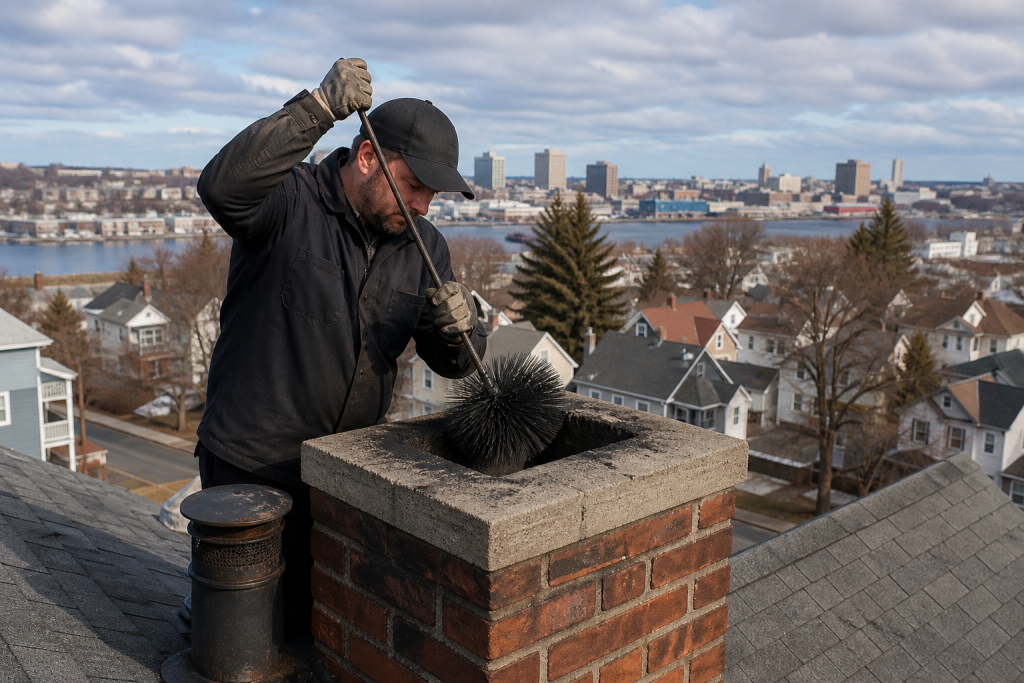
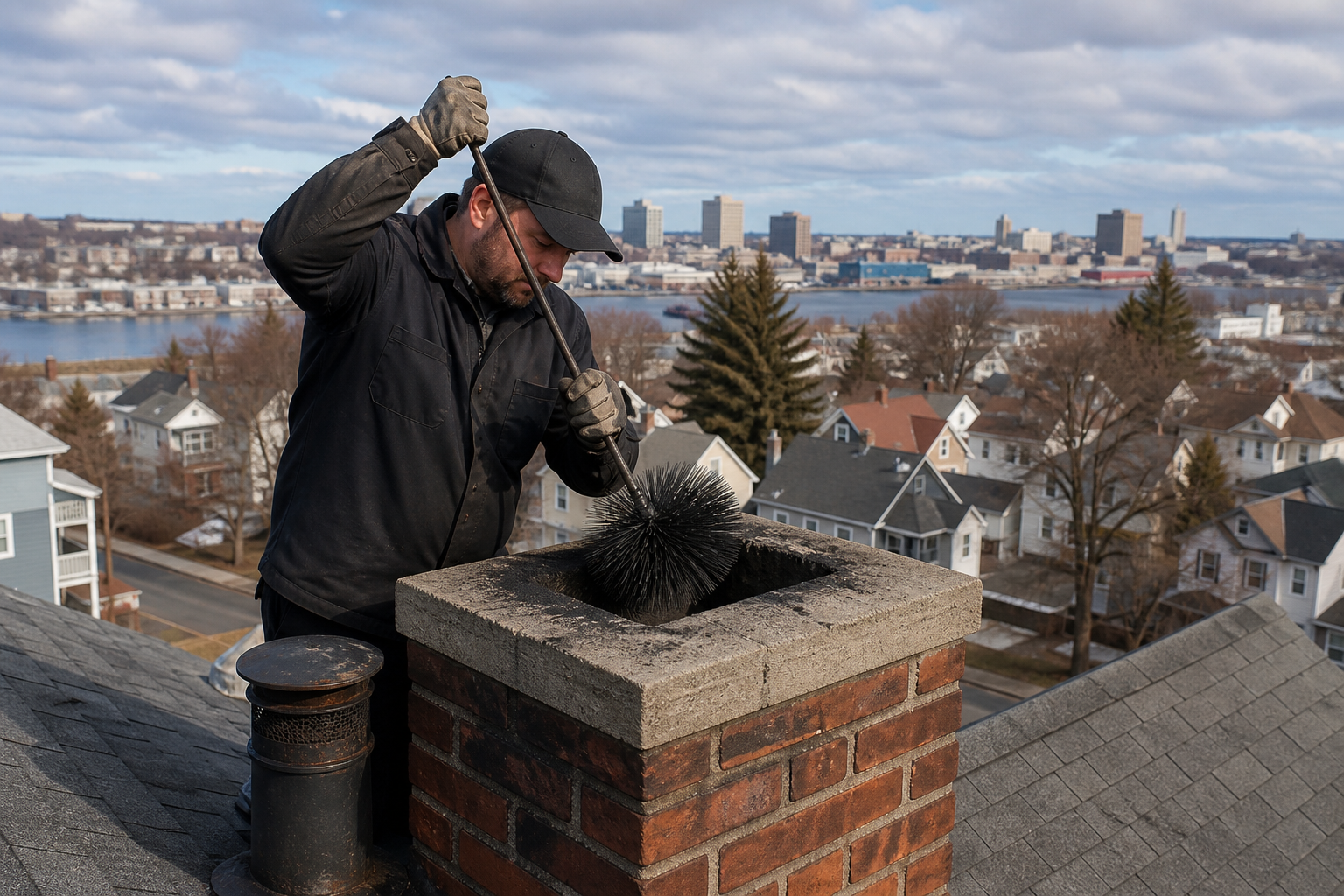
Famco Chimney Cleaning & Sweep in Bridgeport: A Homeowner’s Guide
Famco chimney components are found in more Connecticut homes than most homeowners realize, and routine cleaning and inspection in Bridgeport typically runs $180–$320 depending on accessibility and whether the Famco damper or cap needs adjustment. If you’d rather not climb a ladder to check what you’ve got, call us at (833) 719-7193 — we’ll identify your hardware and give you a free estimate on the spot.
If a technician told you that you have a “Famco cap” and you nodded without knowing what that meant, you’re not alone. It’s one of the most common chimney component brands in CT homes and one of the least explained to homeowners. We’ve been cleaning and servicing chimneys across Bridgeport for eight years, and we’d guess three in ten systems we touch have some Famco hardware in the stack — usually the homeowner had no idea until we pointed it out.
What Famco Actually Makes (And What’s Likely on Your Bridgeport Home)
Famco is a Midwest-based manufacturer that’s been supplying chimney and ventilation hardware for decades. They’re not a boutique brand, and they’re not a big-box afterthought — they’re the practical middle ground that contractors and chimney specialists actually specify for everyday installs.
In Bridgeport homes, we see three Famco product categories most often:
- Chimney caps — Galvanized and stainless steel models, often the standard “wash” or “hip” style with mesh sides. The stainless units hold up better against Long Island Sound salt air, but we’ve replaced plenty of galvanized Famco caps in Black Rock and Brooklawn that rusted through after seven or eight winters.
- Top-sealing dampers — Famco’s damper units mount at the chimney top rather than the throat, sealing with a silicone gasket when closed. They’re energy-efficient and solve a lot of smoke-downdraft problems, but that gasket degrades faster than cast-iron throat dampers.
- Liner components and adapters — Famco manufactures flexible liner termination caps and connection pieces that tie into stainless liner runs. We see these in older Bridgeport colonials and capes where the original clay liner failed and got sleeved with stainless.
Here’s the thing: Famco doesn’t make the flashy, high-end architectural caps you see in design magazines. They make the workhorse hardware that keeps water out, keeps animals out, and keeps your flue drafting properly. That’s why they’re everywhere — they’re specified by pros who need reliable function at a fair cost.
How to Spot Famco Hardware During a Basic Visual Check
You don’t need to be a chimney technician to identify what you’ve got. A pair of binoculars and a steady view from the ground will tell you plenty.
Famco caps: Look for a stamped logo on the top surface or along the mesh screening — usually “FAMCO” in block letters with a model number nearby. The caps tend to have a slightly boxier profile than decorative European styles, with flat or gently sloped lids and straight-sided mesh. If your cap has a pull-chain or cable running down the flue, that’s almost certainly a Famco top-sealing damper integrated with the cap.
Famco dampers: If you have a top-sealing damper, you’ll see a flat metal plate inside the cap body that seals against a frame when closed. The operating mechanism is a stainless cable that drops down the flue to a handle mounted in the firebox or on the hearth. Famco handles are usually black cast aluminum with a simple lever — not the ornate brass styles some premium brands use.
When to call a pro: If you’re seeing rust streaks down the chimney face, if the mesh is bent or missing sections, or if the damper cable feels slack or stuck, don’t force it. We’ve had Bridgeport homeowners snap cables trying to free a seized damper, and that turns a $200 adjustment into a $400 replacement.
Related services in Bridgeport: Chimney Cleaning & Sweep in Hartford and Chimney Repair in Hartford cover the same scope we bring to Fairfield County jobs.
How Connecticut’s Freeze-Thaw Cycle Wears Out Famco Components
This is where our local knowledge matters. Bridgeport sits right on the Sound, and that coastal climate hits chimney hardware harder than inland Connecticut.
The freeze-thaw cycle is brutal on metal components. Water gets into seams, gasket channels, and mesh joints, then expands when temperatures drop below 32°F. Famco’s galvanized caps are particularly vulnerable — we’ve pulled caps off homes in the East End where the mounting flange had crystallized into orange dust after a decade of salt-laden freeze cycles. Stainless Famco caps fare better, but even 304-grade stainless can develop surface corrosion if they’re never cleaned and the salt buildup sits.
Common failure modes we see in Bridgeport:
- Damper gasket hardening — The silicone seal on top-sealing dampers gets stiff after 5–7 years. Instead of flexing to seal, it cracks. You lose the energy savings, and sometimes you get a whistling draft on windy nights.
- Mesh corrosion and separation — The spark-arrestor mesh on Famco caps is spot-welded to the frame. Salt corrosion attacks those welds first. We’ve found mesh panels dangling by a single weld in Seaside Park-adjacent homes.
- Mounting flange rot — Galvanized flanges that sit flat against the crown develop crevice corrosion where water pools. The cap looks fine from the street, but it’s barely attached.
- Cable housing kinks — The damper operating cable runs through a narrow housing. Ice formation in the housing, or a single hard pull by a homeowner, can kink the cable. Once kinked, it binds every time.
Last March, we were on a job in the North End where the homeowner thought their damper was broken because it wouldn’t open. Turns out a squirrel had chewed through the Famco cable housing and water got in, freezing the cable solid. We see that pattern enough that we now check cable housing integrity as standard on every Bridgeport inspection.
Brand-Matched Replacement vs. Compatible Aftermarket: What You Need to Know
Homeowners always ask us: “Do I need another Famco, or can you put something else on?”
The honest answer depends on what’s failing and what your chimney setup looks like.
When Famco brand-matching makes sense:
- Top-sealing dampers — The damper frame is sized to the flue tile or liner, and the cable length is calculated for your chimney height. Swapping brands often means reframing the mount or splicing cable, which adds labor cost without adding function.
- Liner termination caps — Famco adapters are designed to mate with specific liner diameters and brands. Mixing adapter geometry gets risky; we’ve seen improper terminations that created gaps for water infiltration.
When compatible hardware works fine:
- Standard chimney caps — If your flue is a common dimension (8×8, 8×12, 10×10 clay tile), we can fit a Copperfield or Olympia Chimney cap with identical or better specs. We use Copperfield stainless caps for Bridgeport coastal jobs because their 316-grade option outlasts Famco’s 304 in salt air.
- Mesh replacement — If the frame is sound, we can often rescreen with heavier stainless mesh rather than replacing the whole cap.
We don’t push brand loyalty for its own sake. Anthony leads every job, and our call is based on what will last longest in your specific chimney environment. Sometimes that’s another Famco. Sometimes it’s upgrading to DuraFlex liner hardware or a Copperfield cap that better matches your exposure.
For full-scope work including liner replacement, see our Fireplace Services in Hartford — the same standards apply to our Bridgeport jobs.
What a Technician Should Check When Servicing Famco Hardware
If you’re hiring a chimney sweep in Bridgeport — whether it’s us or someone else — here’s what proper Famco service should include. Use this as your checklist.
Cap inspection: Remove the cap (don’t just look at it from the top). Check the mounting flange for corrosion, the mesh welds for integrity, and the lid for proper pitch so water sheds. The cap should sit level; if it’s tilted, the crown beneath may be deteriorating.
Damper cycle test: Open and close the damper fully, five times. It should move smoothly through the entire range. Listen for grinding — that means the cable housing has debris or corrosion. Check the gasket seal by closing the damper and looking for daylight gaps from inside the flue.
Cable and hardware: Inspect the full cable run from handle to damper plate. Look for fraying, kinks, or housing separation at connection points. The handle should lock positively in open and closed positions.
Crown and flashing interface: Famco caps don’t fail in isolation. The crown beneath the cap and the flashing where the chimney meets the roof are part of the same water-management system. We check all three on every service call — it’s why we find crown cracks that other sweeps missed, because they never pulled the cap to look.
Flue condition: With the cap off and damper open, the flue should be visually inspected for glaze buildup, tile separation, or liner damage. In Bridgeport’s older housing stock — especially the pre-war homes in the West End — we’ve found clay tile flues behind Famco caps that were deteriorating badly, with the homeowner unaware because the cap was doing its job keeping water out.
Eight years, one specialty. We’ve seen enough Famco hardware in enough conditions to know what “normal wear” looks like versus “replace before next winter.” That’s pattern recognition you don’t get from a generalist who touches chimneys twice a month.
The Bottom Line
Famco components are common in Bridgeport because they’re practical, widely available, and correctly specified by pros who’ve been doing this for decades. They’re not exotic, they’re not problematic by design — but like any metal hardware in a coastal freeze-thaw climate, they need regular inspection and honest assessment about when repair turns into replacement.
Key takeaways:
- Famco caps, dampers, and liner adapters are standard equipment in many Connecticut homes — check yours with binoculars for the stamped logo
- Coastal salt air and freeze-thaw cycles in Bridgeport accelerate corrosion, especially on galvanized steel
- Top-sealing damper gaskets typically need attention every 5–7 years
- Brand-matched replacement matters for dampers and liner terminations; standard caps often have compatible upgrades
- Any service should include cap removal, full hardware cycling, and flue inspection — not just a brush-and-vacuum sweep
If you’re in Bridgeport and aren’t sure what hardware is on your chimney, or you’ve been told you need Famco service and want a second opinion from someone who knows the product line, Premier Chimney Cleaning Connecticut offers free estimates. Anthony Perez handles the inspection personally. Call (833) 719-7193 and we’ll get you scheduled.
Frequently Asked Questions
Standard chimney cleaning and inspection in Bridgeport runs $180–$320. Famco hardware doesn’t change that base price unless the cap needs removal for flue access, the damper requires adjustment, or we find corrosion that needs addressing. Most Famco-equipped systems fall in the standard range. Call (833) 719-7193 for an exact quote — estimates are free.
You can brush debris off the mesh from the ground with an extendable tool, but we don’t recommend removing the cap or attempting internal cleaning without proper ladder safety and fall protection. We’ve responded to calls in Bridgeport where homeowners damaged mounting flanges or stripped fasteners trying DIY cap removal. For anything beyond surface debris, a professional sweep with the cap off is the safer call.
Galvanized Famco caps typically show meaningful corrosion in 7–10 years along the Sound; stainless models often go 15–20 years with annual cleaning. The difference is maintenance — caps that never get brushed clean of salt and organic buildup fail faster regardless of grade. In our experience, Bridgeport homes within a half-mile of the water should budget for cap inspection every two years, not annually.
Gasket replacement and cable adjustment usually run $150–$250, while full damper replacement with a new cap-damper assembly is $400–$650 installed. If the frame is corroded or the damper plate is warped, repair becomes false economy — we quote both options honestly after inspection. We’ve had Bridgeport homeowners choose repair to get two more seasons, then replace when they’re ready. Call (833) 719-7193 and we’ll show you exactly what you’ve got.
Written by Anthony Perez, Owner & Lead Technician at Premier Chimney Cleaning Connecticut, serving Bridgeport since 2018.
Need Chimney Cleaning Help?
Call Premier Chimney Cleaning Connecticut — licensed & insured, here with fast after-hours help in Connecticut.
(833) 719-7193