
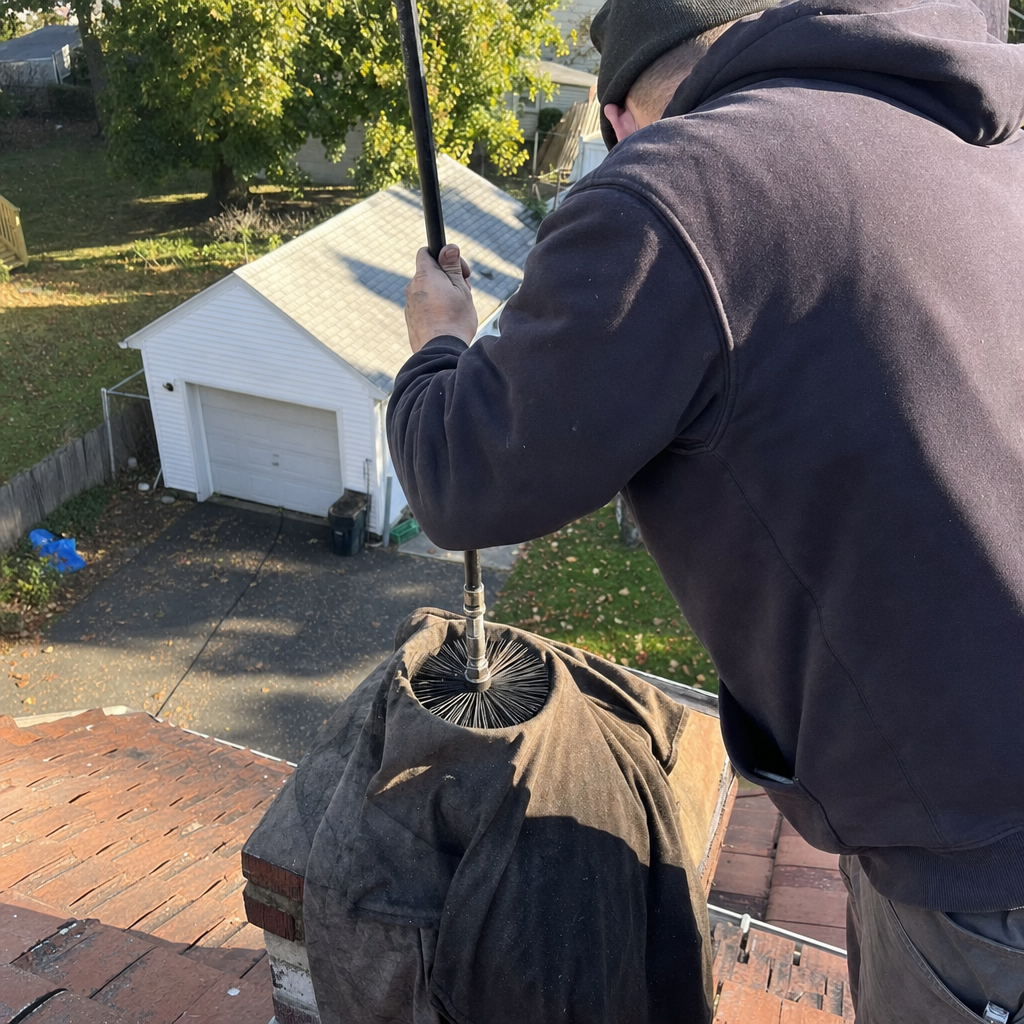
Fast, Reliable Chimney Cleaning & Sweep Across Newington
A typical Level 1 chimney sweep and inspection in Newington costs $175–$275, while a Level 2 inspection with video scan runs $325–$475. Most appointments are scheduled within 48 hours, and Anthony Perez — owner and lead technician at Premier Chimney Cleaning Connecticut — personally handles the work from our Bridgeport base. Call (833) 719-7193 for a free estimate.
We’ve been driving to Newington for eight years, and we know the difference between a house on South Main Street near Pulaski Circle and one tucked back in the Jefferson–Seymour Historic District. That matters because your chimney’s problems aren’t generic — they’re shaped by when your home was built, what it originally burned, and what it’s burning now. Our Chimney Cleaning & Sweep team doesn’t treat Newington as an afterthought. We’re here regularly, and we’ve learned what this specific housing stock does to flue systems over decades.
Why Premier Chimney Cleaning Connecticut Is Newington’s Preferred Chimney Cleaning & Sweep Company
We didn’t build our reputation on marketing. Eight years specializing exclusively in chimney work — no gutters, no roofing sideline — means Anthony has developed pattern recognition across hundreds of flue systems. When he pulls up to a 1960s ranch off Main Street, he already knows the likely liner condition before he unloads the ladder.
That expertise shows in our numbers: 800+ customer reviews averaging 4.7 stars. Newington homeowners aren’t shy about calling out sloppy work, and our sustained volume speaks to repeat customers and referrals across the 06111 and 06131 ZIP codes. Anthony leads every job personally — there’s no rotating crew of seasonal hires who might miss what he catches.
Our response time to Newington is typically next-day or within 48 hours for standard sweeps, because we’re already in the area several times weekly. Emergency calls — suspected blockages, carbon monoxide alarms, visible chimney damage after storms — get prioritized same-day when safety is at stake.
What separates us from generalist handymen and single-service sweeps is scope. From annual sweep to full rebuild, we handle it. You won’t need to find a separate contractor when a routine inspection reveals liner failure or crown deterioration. We carry DuraFlex and HeatShield materials on our truck, and we stock Gelco and Olympia Chimney components for common Newington configurations — meaning faster turnaround, not weeks waiting on parts.
Our Chimney Cleaning & Sweep Services in Newington
Level 1 Inspection
The Level 1 inspection is our baseline service for Newington homeowners with chimneys in regular use and no known changes to the system. We examine readily accessible portions of the chimney exterior, interior, and connecting appliance — checking for obstructions, combustible deposits, and structural soundness. For the thousands of Cape Cods and split-levels built during Newington’s 1950s–1970s expansion, this annual check catches developing problems before they become hazardous. We document everything, and Anthony explains findings in plain terms — no jargon, no pressure.
Level 2 Inspection
This is where our Newington expertise proves its worth. A Level 2 inspection includes video scanning of the flue interior, and it’s mandatory after any fuel conversion, chimney fire, seismic event, or real estate transaction. Here’s why it matters specifically in Newington: the town’s post-WWII suburban build-out concentrated heavily in the 1950s through 1970s, leaving a dense stock of Cape Cods, ranches, and split-levels whose original masonry chimneys were sized and lined for oil-fired furnaces. The widespread municipal push toward natural gas conversion over the past two decades means thousands of these flues are now venting gas appliances through oversized, unlined, or deteriorating clay-tile chimneys. A Level 2 camera scan reveals acidic condensate staining, liner fractures, and mortar joint deterioration invisible from a basic visual check — damage that develops 10–15 years after conversion and poses real backdrafting risks.
We swept and inspected a 1965 ranch on Waterville Road last fall. The homeowners had converted to gas in 2008; our Level 2 camera revealed acidic staining and a cracked original terra-cotta liner in the first 3 feet below the flue cap — undetectable from a basic Level 1 — and we installed a DuraFlex stainless steel liner to prevent further spalling.
Creosote Removal
Newington’s hard winters mean fireplaces and wood-burning inserts see heavy seasonal use. Creosote — that tarry, combustible byproduct of incomplete wood combustion — builds in stages. Stage 1 is flaky soot, easily brushed. Stage 2 becomes crunchy, porous deposits requiring mechanical sweeping. Stage 3 is glazed, hardened creosote, nearly impossible to remove with standard tools and highly flammable. We see Stage 2 and 3 buildup regularly in homes near the Horticultural Gardens at Elizabeth Park area, where older masonry fireplaces with poor draft pull smoke slowly and cool it prematurely. Our rotary sweeping system and professional-grade polypropylene brushes break even stubborn deposits without damaging original terra-cotta liners. Annual removal isn’t optional if you burn regularly — it’s fire prevention.
Soot Removal
Oil and gas appliances produce different soot profiles than wood fires, and Newington’s conversion history creates specific cleaning challenges. Oil soot is dense, acidic, and corrosive to mortar. Gas appliances produce finer, lighter deposits that can mask developing liner damage. In homes that switched fuels without proper liner resizing, we often find hybrid buildup — old oil soot bonded with new condensate residue — that standard brushes won’t touch. Our vacuum-assisted sweeping captures fine particulates before they enter your living space, and we inspect the smoke chamber and firebox for staining patterns that indicate draft problems. For gas-converted systems, clean flues also mean accurate future diagnostics — you can’t spot new cracks through layers of old residue.
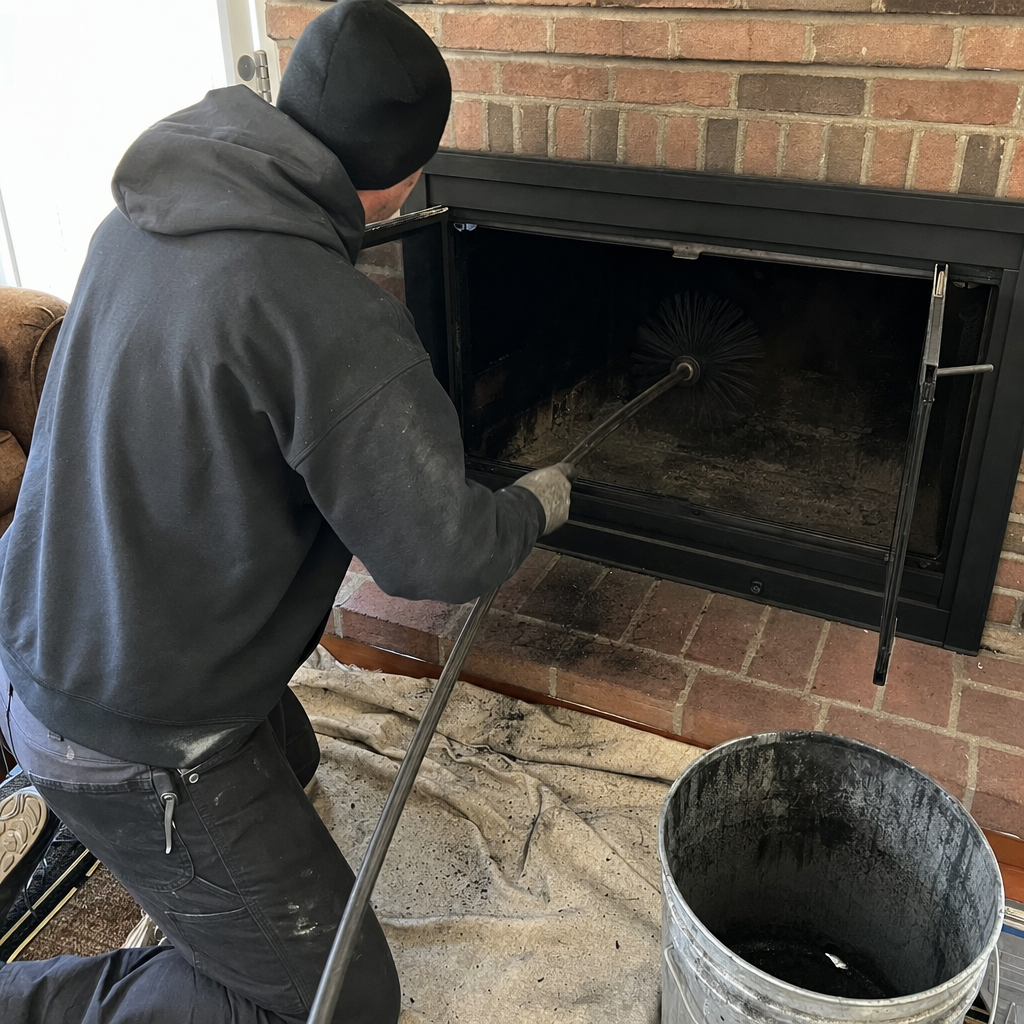
Annual Sweep and Fireplace Cleaning
We bundle sweeping with inspection for Newington homeowners who use their fireplaces or heating appliances regularly. The service includes firebox cleaning, damper adjustment, smoke chamber evaluation, and debris removal from the hearth area. In the Imlay and Laurel Streets District and surrounding neighborhoods, we often find original throat dampers seized from decades of corrosion — a simple fix that dramatically improves draft and reduces smoke spillage into the room. We finish with a condition report and clear recommendations, prioritized by safety urgency.
What happens when you call
- 1
A real person answersNo phone trees — you reach a local pro.
- 2
You get an upfront price rangeHonest numbers before anyone is dispatched.
- 3
A background-checked tech heads outLicensed & insured, dispatched right away.
- 4
You approve before work beginsNothing starts until you say go.
Trusted Brands We Service in Newington
We don’t use hardware-store substitutes. For liner installations and relining work in Newington’s gas-converted chimneys, we specify DuraFlex stainless steel liners — the same product chimney professionals nationwide trust for their durability and proper sizing flexibility. For crown repair and resurfacing, HeatShield provides a ceramic resurfacing system that seals minor cracking without full rebuild cost. Gelco caps and Olympia Chimney components cover most Newington flue configurations we encounter, from standard square clay liners to oversized rectangular flues mismatched to modern gas appliances. We carry inventory for common sizes, so most Newington jobs don’t face parts delays. When we recommend a product, it’s because we’ve installed it, watched it perform through Connecticut freeze-thaw cycles, and know it holds up.
Common Chimney Cleaning & Sweep Problems We See in Newington Homes
- Condensation damage from gas conversions. Natural gas burns cooler and wetter than fuel oil. When vented through flues designed for oil’s hotter, drier exhaust, the excess moisture condenses on oversized clay-tile surfaces, leaching acids that deteriorate mortar joints and spall brick faces within 10–15 years of conversion.
- Freeze-thaw fracture progression. Newington sits in the Connecticut River Valley, where hard winters with repeated freeze-thaw cycling — ice forming inside hairline cracks in mortar joints and liner tiles, then expanding — accelerates chimney crown and flue deterioration faster than in coastal CT towns with milder temperature swings.
- Undiscovered liner damage from perfunctory conversion inspections. A technician working Newington regularly finds chimneys that passed a basic inspection at the point of gas conversion but now, 10–15 years later, show advanced acidic condensate staining and liner fractures invisible from the roofline — a direct consequence of gas appliances sending moist, low-temperature flue gases up a flue diameter originally engineered for the hotter, drier exhaust of a fuel-oil boiler.
- Original clay-tile stress fractures from decades of oil service. The bulk of Newington’s residential neighborhoods consist of modest Cape Cods, ranch homes, and split-levels built between roughly 1948 and 1975, most with single masonry chimneys serving both a central heating appliance and a living-room fireplace. These chimneys commonly feature original terra-cotta liner sections that have been stressed by decades of oil combustion and are now physically mismatched to the lower-temperature, higher-moisture exhaust of modern gas equipment.
Pricing for Chimney Cleaning & Sweep in Newington, CT
Honest pricing means actual numbers, not “call for quote” dodges. Here’s what Newington homeowners typically pay:
- Level 1 Inspection + Sweep: $175–$275
- Level 2 Inspection with Video Scan: $325–$475
- Creosote Removal (heavy buildup, Stage 2–3): $275–$450
- Gas Appliance Flue Cleaning: $195–$295
- Annual Sweep & Fireplace Cleaning Bundle: $225–$350
Factors that move you within these ranges: accessibility (steep roof pitch, tight clearances), severity of buildup, need for specialized equipment to remove glazed creosote, and whether we discover damage requiring documentation for insurance or real estate purposes. Liner installation, crown repair, or cap replacement are quoted separately after inspection.
We don’t charge travel fees to Newington — we’re here regularly. Estimates are free, and Anthony reviews findings with you before any additional work proceeds. Call (833) 719-7193 to schedule.
We Also Serve Cities Near Newington
Our service radius covers Wethersfield, West Hartford, Farmington, and Hartford — all within easy reach of our Bridgeport base. Many of our Newington customers found us through referrals from family in these neighboring towns. The housing stock and conversion-era challenges are similar across this corridor, and we carry the same product inventory and expertise to every job regardless of municipality.
Serving Newington, CT — Our Local Coverage Area
We’re based in the Newington area and know this community well. Use the map below to see our service coverage — if you’re nearby, we can almost certainly help.
FAQs — Chimney Cleaning & Sweep in Newington
Almost certainly yes, and the sooner you verify, the better. Oil-fired flues run larger diameter and hotter than gas requires; the mismatch causes acidic condensation that destroys clay tile from the inside out. We recommend a Level 2 inspection to assess current liner condition — many gas conversions in Newington were done without proper resizing, and we’ve found advanced hidden damage in homes converted 10–15 years ago. Call (833) 719-7193 to schedule a video scan; estimates are free.
That staining is acidic condensate carrying soot and combustion byproducts — a signature symptom of an oversized flue. The moist, low-temperature exhaust from gas appliances doesn’t rise fast enough to escape before cooling, so it condenses on the cap and exterior masonry, leaving corrosive residue. In Newington’s conversion-era housing stock, we see this pattern repeatedly on original chimneys never resized for gas. It’s not cosmetic; it signals ongoing deterioration inside the flue. A properly sized stainless steel liner — we typically use DuraFlex — eliminates the condensation source.
Yes, though for different reasons than wood-burning systems. Gas flues don’t accumulate creosote, but they do collect corrosive condensation residue, debris from deteriorating liners, and occasional blockages from failed caps or animal intrusion. Newington’s freeze-thaw climate accelerates liner and crown damage, and annual inspection catches problems before they become carbon monoxide hazards or expensive rebuilds. For gas-converted systems especially, we emphasize Level 2 inspection every 2–3 years minimum. Call (833) 719-7193 to set up a schedule that matches your appliance type and usage.
High-efficiency furnaces make the flue-sizing problem worse, not better. They extract so much heat that exhaust temperatures drop even further, increasing condensation in an already-oversized flue. Manufacturer warranties and local codes typically require proper liner sizing for high-efficiency installations. We’ve relined dozens of Newington split-levels where homeowners hoped to avoid the expense — the original flue simply can’t perform safely with modern equipment. A Level 2 inspection gives you definitive guidance before you commit to the furnace purchase.
The odor usually comes from two sources: accumulated soot and debris heating up as gas exhaust passes through, or negative air pressure pulling chimney odors into the living space through a damaged or missing liner section. In Newington’s conversion-era homes, we often find both — old oil residue baking in a now-underutilized fireplace flue, combined with liner gaps that allow exhaust to leak into surrounding masonry and back into the house. A thorough sweep and Level 2 inspection identifies which mechanism is active in your specific chimney. Call (833) 719-7193 — we’ll diagnose it and give you a clear fix with upfront pricing.
Written by Anthony Perez, Owner at Premier Chimney Cleaning Connecticut, serving Newington and the greater Hartford County area since 2016.