
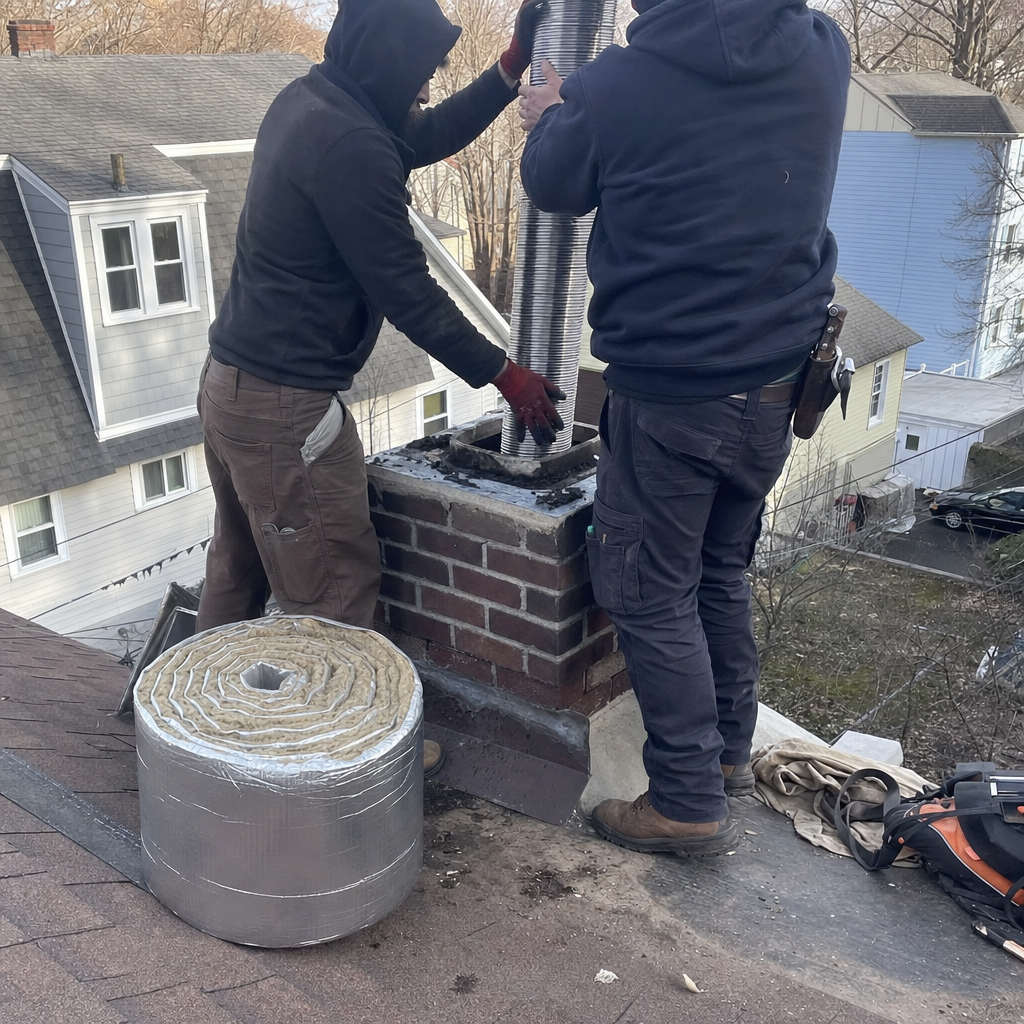
Fast, Reliable Chimney Liner & Rebuild Across New Britain
A stainless steel chimney liner installation in New Britain typically runs $2,800–$4,500, while a full chimney rebuild on a triple-decker can reach $8,500–$15,000 depending on height and access. Most liner jobs in New Britain are completed in one to two days, with our Chimney Liner & Rebuild team carrying the DuraFlex and HeatShield inventory needed for same-day starts on standard flue sizes. We’re based in Bridgeport and regularly on Arch Street, the East Side, and the Corbin Heights neighborhood — call (833) 719-7193 and we’ll usually have eyes on your chimney within 24 to 48 hours.
New Britain’s housing stock isn’t like the suburban splits in West Hartford or the new construction in Berlin. We’re working in tight lots, alley-loaded triple-deckers, and century-old masonry that was built for coal fires and modified three times since. That history lives in your flue system — abandoned coal flues, layered creosote, oil-to-gas conversions that never got proper liner certification. Anthony Perez, our owner and lead technician, has spent eight years diagnosing these exact conditions. When you call Premier Chimney Cleaning Connecticut, Anthony leads every job, not a subcontractor learning your chimney on the clock.
Why Premier Chimney Cleaning Connecticut Is New Britain’s Preferred Chimney Liner & Rebuild Company
We’ve earned our reputation in New Britain through repeat calls from landlords on Grove Street, homeowners near Walnut Hill Park, and property managers with portfolios of 06050 and 06052 rentals. Eight years specializing exclusively in chimney work means we’ve seen the specific failure patterns that repeat across New Britain’s pre-1940 housing — freeze-thaw spalling on south-facing exposures, abandoned flues that become water conduits, gas conversions that skipped liner inspection. Pattern recognition matters when your chimney chase contains three flues serving three units.
800+ homeowners have reviewed us at a 4.7-star average. That volume reflects real jobs completed, not a handful of testimonials curated for a website. New Britain customers specifically mention Anthony’s willingness to explain what he found — why the abandoned coal flue needs capping, why the oil-to-gas conversion requires a new liner diameter, why the exterior brick can’t wait another winter. We don’t send a salesperson to sell and a crew to execute. Anthony leads every job, so the person quoting is the person accountable.
Response time to New Britain runs same-day to next-day for liner assessments and most rebuild consultations. We keep common DuraFlex diameters, HeatShield cerfractory mix, and Gelco stainless caps stocked for the 06050–06053 ZIP codes, which means fewer supply runs and faster project starts. For full rebuilds requiring scaffolding on tight East Side lots, we coordinate access with neighbors and schedule around street-parking patterns — local knowledge that prevents delays.
Our Chimney Liner & Rebuild Services in New Britain
Stainless Steel Liner Installation
We install rigid and flexible stainless steel liners for active wood-burning, oil, and gas flues in New Britain’s multi-unit housing. A single triple-decker chimney chase near downtown might need two separate stainless liners — one for a basement oil burner, one for a first-floor fireplace — each sized to the appliance and insulated to maintain proper draft. We use DuraFlex flexible liners for offsets and tight clearances common in these older structures, and rigid Olympia Chimney sections where the flue runs straight. Typical cost in New Britain: $2,800–$4,500 per flue, including insulation, top plate, and connection fitting.
Flexible Liner Systems
Flexible liners solve the offset problems that plague New Britain’s converted housing. When a coal-era chimney was retrofitted for oil or gas, the flue path often shifts around structural members that weren’t designed for modern appliance connections. DuraFlex and Copperfield flexible liners navigate these offsets without breaking the flue wall, maintaining the smooth interior that prevents creosote buildup. In the triple-deckers along Arch Street and the dense blocks off West Main, we’ve pulled flexible liners through chases that rigid pipe simply couldn’t follow. Installation runs $2,500–$4,200 depending on length and offset complexity.
Liner Replacement & Repair
Clay tile liners crack. In New Britain, they crack faster. The city’s inland location — no coastal temperature moderation — means dozens of freeze-thaw cycles each winter. Water enters through failed crowns or missing caps, freezes in hairline cracks, and opens them to full fractures. We see this constantly on south and west exposures above the 06051 and 06052 neighborhoods. HeatShield cerfractory resurfacing can restore a sound clay liner with minor cracking for $1,800–$2,800. When the tile is spalled or shifted, we extract and replace with stainless. Anthony evaluates each flue individually — no blanket recommendations.
Partial & Full Chimney Rebuild
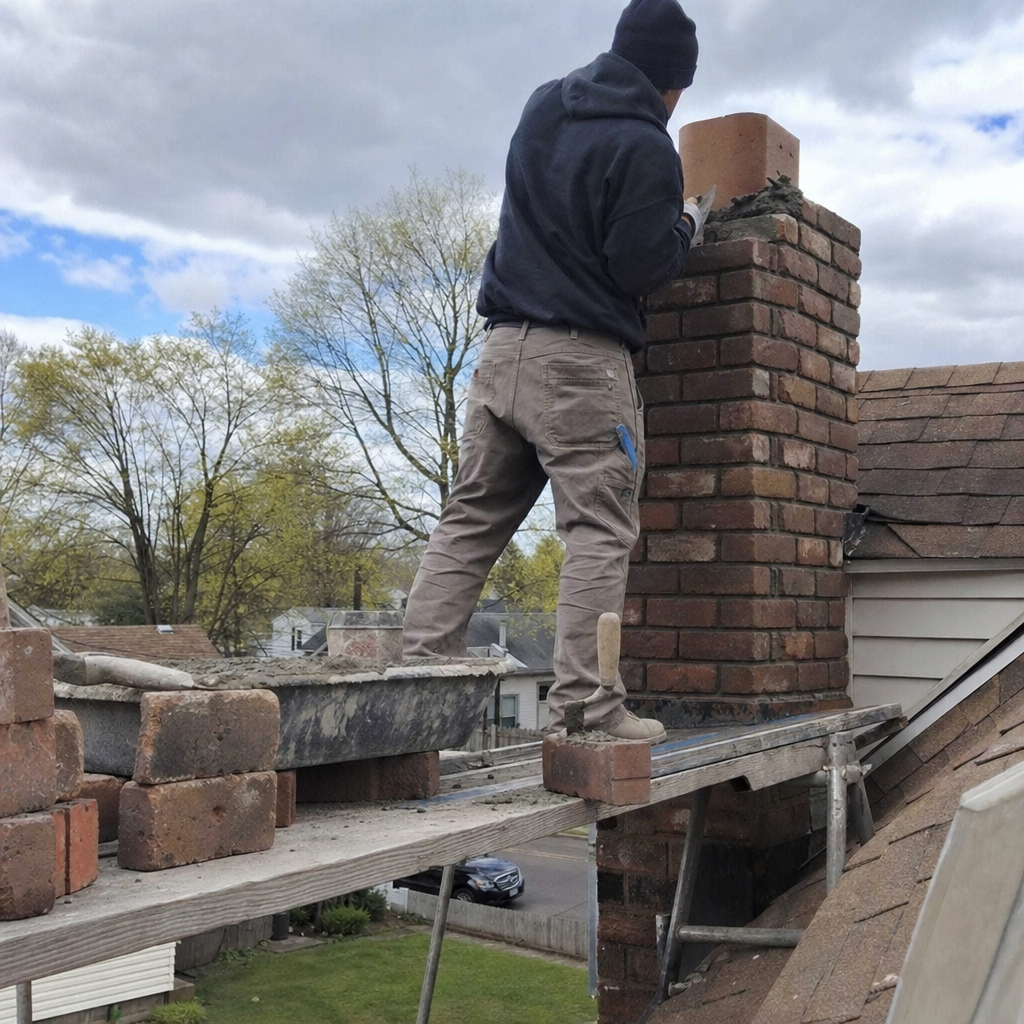
We recently rebuilt the shared masonry chimney at a triple-decker on Arch Street near downtown, where three units shared one chase with two active gas flues and one abandoned coal flue. We installed a DuraFlex flexible liner in the active flues, sealed the abandoned flue with a stainless steel cap, and repointed the exterior brick with a high-strength mortar mix to handle New Britain’s freeze-thaw cycles. Full rebuilds on triple-deckers run $8,500–$15,000; partial rebuilds (crown replacement, above-roof rebuild only) range $4,200–$7,500. Tight alley access on the East Side and near Corbin Heights requires specialized scaffolding setups — we don’t bring equipment that doesn’t fit, and we don’t skip structural courses to make it easier.
What happens when you call
- 1
A real person answersNo phone trees — you reach a local pro.
- 2
You get an upfront price rangeHonest numbers before anyone is dispatched.
- 3
A background-checked tech heads outLicensed & insured, dispatched right away.
- 4
You approve before work beginsNothing starts until you say go.
Trusted Brands We Service in New Britain
We stock DuraFlex flexible liners, HeatShield resurfacing mix, and Gelco stainless caps at our Bridgeport warehouse — common diameters and fittings for New Britain’s typical flue sizes, which means most liner jobs start same-day or next-day without waiting on freight. For specialized applications in historic homes near Walnut Hill Park or the West End, we source Copperfield and Olympia Chimney components with two-day turnaround. We use these brands because they’re specified by chimney professionals, not because they’re available at the hardware store down the street. The difference shows up ten years later when a cheap liner has failed and ours hasn’t.
Common Chimney Liner & Rebuild Problems We See in New Britain Homes
- Multi-flue cross-venting in triple-deckers. Chimney liners in triple-deckers fail when homeowners or landlords skip the flue-by-flue sweep and liner certification, leading to dangerous gas cross-venting between units. We inspect every flue in a shared chase independently — no exceptions, no assumptions that one clean flue means the others are safe.
- Abandoned coal flues becoming water damage conduits. Shared masonry stacks with abandoned coal flues often lack proper caps, allowing water infiltration and ice damming that accelerates liner cracking and spalling brick. In New Britain’s 06050 ZIP, we regularly open chases to find abandoned flues filled with decades of debris and standing water.
- Freeze-thaw destruction of exterior masonry. New Britain sits inland with no coastal temperature moderation, cycling through freezing dozens of times each winter. Annual snowfall near 40 inches, combined with flat chimney caps common on older stacks, allows ice damming that pushes apart mortar joints and opens liner channels to the elements.
- Tight access forcing incomplete repairs. Tight alley-load access and on-street parking in neighborhoods like the East Side make it hard to bring in heavy equipment for full rebuilds, so crews frequently cut corners with partial repairs that don’t address the full stack condition. We build custom scaffolding configurations for these sites and don’t accept jobs we can’t finish properly.
Pricing for Chimney Liner & Rebuild in New Britain, CT
| Service | Typical Range in New Britain | What Affects Cost |
|---|---|---|
| Flexible stainless liner (single flue) | $2,500–$4,200 | Length, offsets, insulation required |
| Rigid stainless liner (single flue) | $2,800–$4,500 | Diameter, straight vs. offset run |
| HeatShield liner resurfacing | $1,800–$2,800 | Flue condition, square footage to cover |
| Partial rebuild (crown/above-roof) | $4,200–$7,500 | Height, scaffolding complexity, brick matching |
| Full chimney rebuild (triple-decker) | $8,500–$15,000 | Height, access, number of flues, liner integration |
| Liner repair (spot patching) | $800–$1,600 | Location of damage, accessibility |
These ranges reflect actual quotes we’ve delivered in New Britain’s 06050–06053 ZIP codes over the past three years. Every job starts with a free, no-obligation inspection — Anthony will camera-scan your flue, assess the exterior masonry, and explain what you’re actually looking at. No pressure, no mystery. Call (833) 719-7193 to schedule.
We Also Serve Cities Near New Britain
Our Chimney Liner & Rebuild crews work regularly in Kensington, Plainville, Newington, and Wethersfield — the same triple-decker and pre-war housing patterns extend through these central Connecticut towns, and we bring the same flue-by-flue inspection discipline to every job. If you’re a landlord with properties across multiple towns, we can coordinate liner certifications and rebuild schedules across your portfolio.
Serving New Britain, CT — Our Local Coverage Area
We’re based in the New Britain area and know this community well. Use the map below to see our service coverage — if you’re nearby, we can almost certainly help.
FAQs — Chimney Liner & Rebuild in New Britain
New Britain’s identity as the “Hardware City” drew waves of Polish and Southern European immigrant factory workers in the late 1800s and early 1900s, producing dense blocks of two- and three-family worker housing with shared masonry chimney stacks that served multiple flues across multiple units. These stacks were built for coal, then converted to oil, then to gas — each fuel transition leaving behind liner compatibility issues, abandoned flues, and creosote/soot layering that chimney techs in newer suburban cities rarely encounter at this scale. A single chase might contain an active oil burner flue, a recently converted gas flue, and a fully abandoned coal flue, each requiring independent inspection and appropriate lining before any appliance can operate safely. Call (833) 719-7193 if you’re unsure what your chase contains — we’ll camera-inspect every flue and show you the footage.
Yes — Connecticut building code and manufacturer warranty requirements both mandate proper liner sizing for gas appliances, and oil-to-gas conversions without liner inspection are a leading cause of carbon monoxide incidents in New Britain’s older housing. On the East Side and in dense downtown-adjacent blocks, it’s routine to find that the existing clay tile liner is oversized for modern gas efficiency appliances, causing condensation damage and poor draft. We perform flue-by-flue liner certification before any conversion can be safely signed off — a step that catches many homeowners and landlords off guard when they assumed the existing chimney was “fine.” Call (833) 719-7193 for a pre-conversion inspection; estimates are free.
New Britain’s inland location means it cycles through the freezing point dozens of times each winter and spring — conditions that aggressively spall brick and deteriorate mortar joints on exterior masonry chimneys. Annual snowfall averaging around 40 inches, combined with flat chimney caps common on older stacks, allows ice damming and water infiltration that accelerates liner cracking. We specify high-strength mortar mixes rated for these cycles on every New Britain rebuild, and we install sloped Gelco stainless caps with proper drip edges to shed water rather than pool it. For liner work, we insulate flexible liners to maintain flue gas temperature above condensation points — critical when ambient temperatures swing from 20°F to 50°F repeatedly through a single week. Call (833) 719-7193 to schedule before the next freeze cycle worsens existing damage.
Yes — we’ve rebuilt chimneys on Arch Street, Grove Street, and throughout the East Side where standard boom trucks can’t fit. We use modular scaffolding systems that break down to alley-width components and hand-carry materials when necessary. The Arch Street triple-decker we referenced earlier required exactly this approach: custom scaffolding, staged material delivery, and coordination with neighbors for temporary parking clearance. We don’t accept full-rebuild jobs in tight-access locations unless we can execute them properly — no corner-cutting with partial repairs that leave the stack structurally compromised. Call (833) 719-7193 and Anthony will assess your specific access constraints during the free estimate.
We install DuraFlex flexible liners, Olympia Chimney rigid systems, and HeatShield resurfacing products — all specified by chimney industry professionals for durability and code compliance. In New Britain’s historic homes near Walnut Hill Park and the West End, we often pair DuraFlex liners with Gelco stainless caps and Copperfield connection fittings to navigate the tight clearances and offset flue paths common in converted coal-era chimneys. We don’t use hardware-store substitutes or unbranded components — the brands we specify are the same ones you’ll find in the National Fire Protection Association’s reference materials. Call (833) 719-7193 to discuss which system fits your specific flue configuration.
Written by Anthony Perez, Owner at Premier Chimney Cleaning Connecticut, serving New Britain since 2016.