
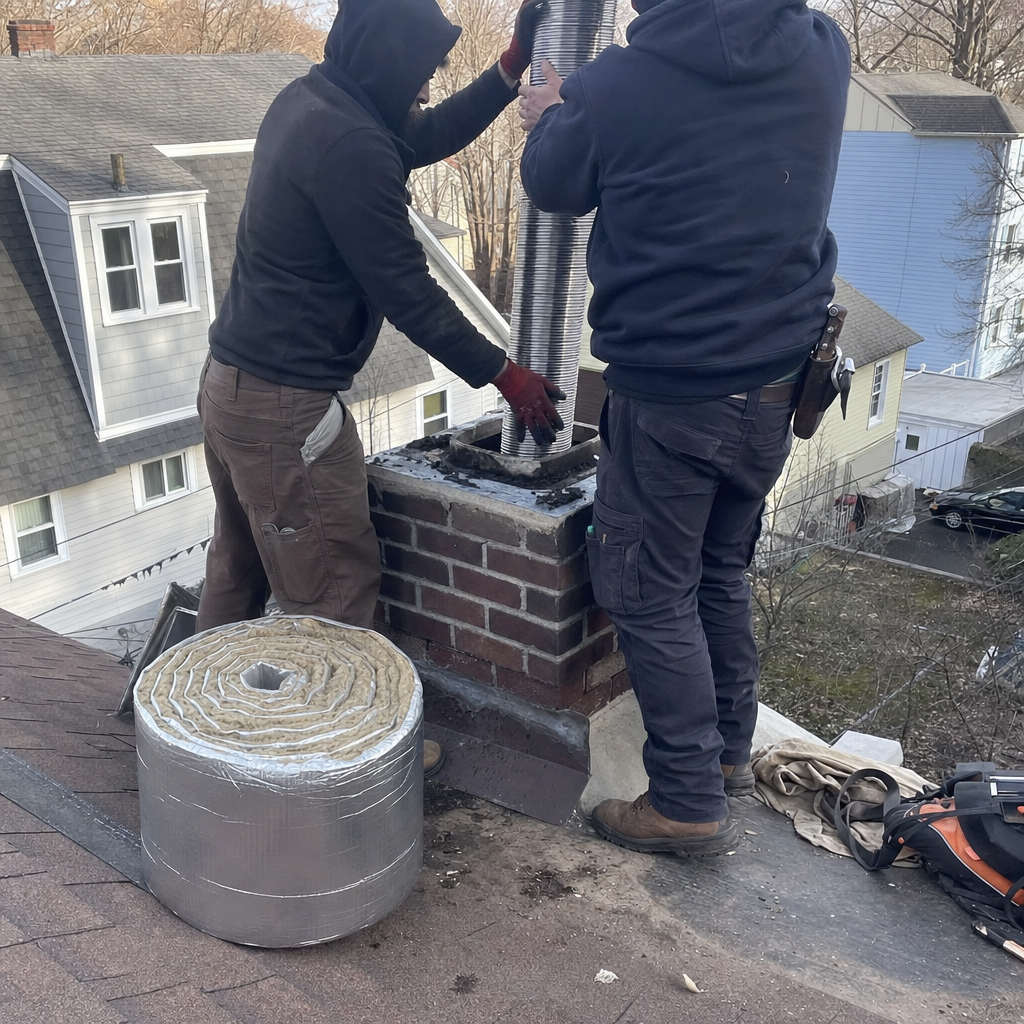
Fast, Reliable Chimney Liner & Rebuild Across Yonkers
Chimney liner replacement and rebuild work in Yonkers typically runs $2,800–$8,500 depending on whether we’re dropping a single stainless steel liner into a straightforward flue or rebuilding a shared gang chimney in a pre-war row house. Most liner-only jobs in Yonkers finish in one day; full rebuilds on multi-flue structures usually take two to three. We’re across the state line from Bridgeport regularly, and Yonkers is well within our standard service radius — call (833) 719-7193 and we can usually book an inspection within 48 hours.
Yonkers isn’t like the rest of Westchester. The city’s dense corridors of pre-1940 attached housing — from the Hudson waterfront up through the plateau neighborhoods east of the Saw Mill River Parkway — present chimney problems you won’t find in newer suburban towns. We’ve spent eight years specializing exclusively in chimney work, and the coal-to-gas conversion failures we see in Yonkers row houses are some of the most structurally complex in our entire service area. Our Chimney Liner & Rebuild team handles everything from single-family liner drops to full four-flue rebuilds on shared masonry stacks.
Why Premier Chimney Cleaning Connecticut Is Yonkers’s Preferred Chimney Liner & Rebuild Company
Anthony leads every job. Anthony Perez, our owner, is also our lead technician — not a dispatcher sending seasonal hires. When you schedule a liner inspection or rebuild in Yonkers, Anthony is the person climbing your roof, running the camera, and making the call on whether your flue needs a repair or full replacement. That direct accountability matters especially in Yonkers, where the shared gang chimneys common in 10703 and 10704 require a technician who can trace exhaust paths across multiple units without guessing.
Eight years, one specialty. We’ve completed over 800 jobs, and our 800+ customer reviews at a 4.7-star average reflect that sustained, high-volume record — not a handful of curated testimonials. Yonkers homeowners specifically mention our willingness to explain what we found on camera and why it mattered.
We understand Yonkers’s geography. The abrupt elevation change from the Hudson River waterfront up to the eastern plateau means upper-city chimneys face significantly more wind exposure, driving faster freeze-thaw spalling every winter. Hudson-facing structures in 10705 absorb persistent river moisture that accelerates brick and mortar deterioration. We’ve rebuilt crowns on Palisade Avenue homes where the mortar had turned to sand in under seven years from combined wind and river moisture exposure.
Our Chimney Liner & Rebuild Services in Yonkers
Stainless Steel Liner Installation
Stainless steel liners are what most Yonkers homes need — especially the pre-1940 row houses and two-family buildings with original coal flues converted to gas. Those oversized, unlined clay-tile flues trap acidic condensation from cooler gas exhaust, accelerating liner spalling and mortar decay at a rate unseen in newer suburban Westchester towns. We install 316L stainless steel liners, typically DuraFlex or Olympia Chimney products, sized precisely to your appliance’s BTU output and draft requirements. In Yonkers’s tighter flue configurations, we often need to remove deteriorated clay tiles first to get proper clearance — a step less experienced crews skip, leading to failed inspections.
Flexible Liner Installation
Flexible liners solve the offset and bend problems common in Yonkers’s older masonry. Many of these chimneys were built without straight flues — decades of settling, freeze-thaw cycles, and past repairs have created offsets that rigid liners simply won’t navigate. We use DuraFlex 316L flexible liners for these applications, running a pull rope and cone system that follows the chimney’s actual path rather than forcing a straight line. In the 10701 corridor near Getty Square, we’ve installed flexible liners through chimneys with two separate 15-degree offsets where rigid pipe would have required destructive wall removal.
Liner Replacement
Replacement becomes necessary when existing liners — whether clay tile, old aluminum, or failed stainless — have cracked, separated, or developed holes that allow exhaust gases into masonry joints. In Yonkers’s converted gas systems, we regularly find clay tiles that have spalled from interior acid exposure while the exterior brick looks perfectly sound. That’s the trap: the chimney looks fine from the street. We camera-inspect every liner replacement candidate to document exactly where the failure starts and stops, then provide footage you can review yourself.
Partial and Full Chimney Rebuild
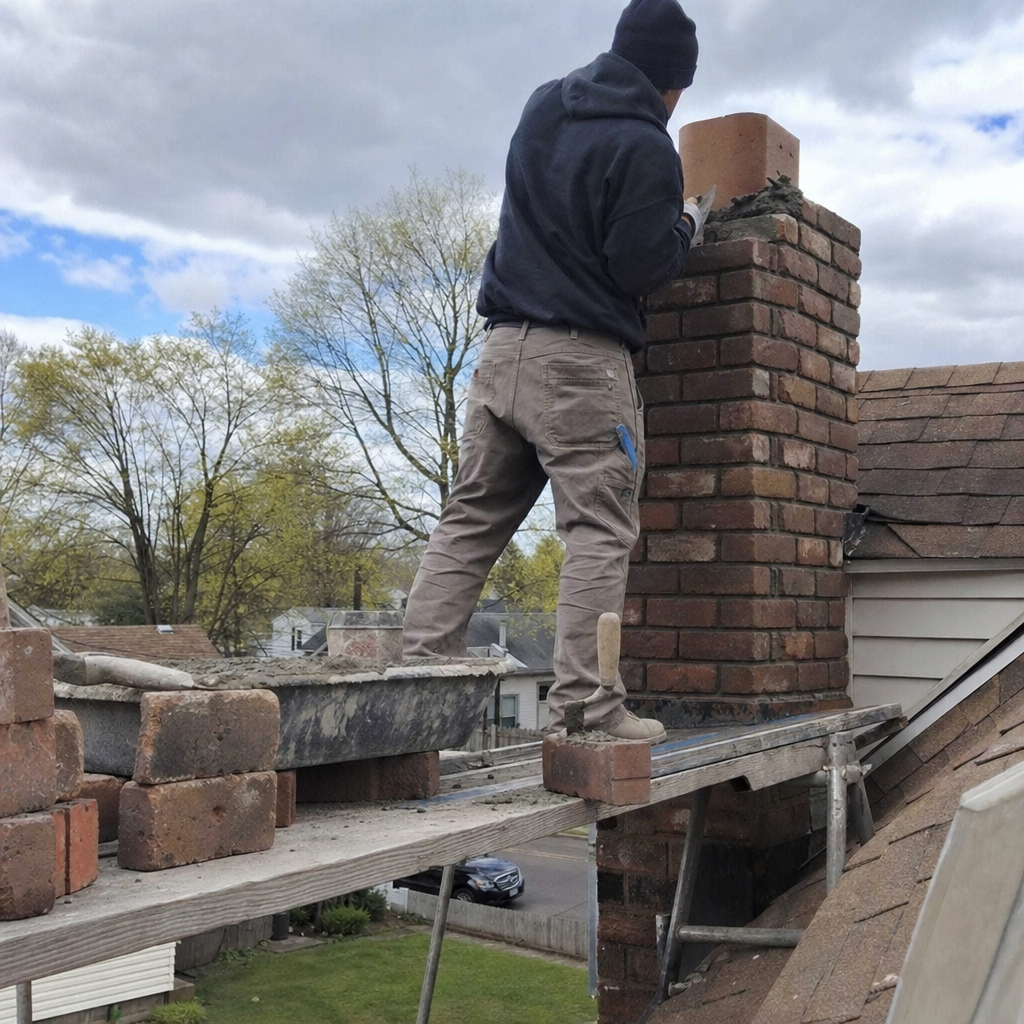
Full rebuilds in Yonkers usually follow years of deferred maintenance on shared structures. We recently rebuilt a shared gang chimney in a 1920s row house on Palisade Avenue in the 10701 corridor. Four flues were serving separate units, and the original clay tiles had collapsed inward, bridging debris between active flues. We installed four independent DuraFlex 316L flexible liners — one per unit — and rebuilt the crown with a stainless steel chase cover to prevent future water intrusion. The job took three days and required coordination with all four homeowners to ensure no flue was blocked during the process. Partial rebuilds target specific failure zones: crown replacement, above-roof brick repair, or smoke chamber parging when the lower structure remains sound.
What happens when you call
- 1
A real person answersNo phone trees — you reach a local pro.
- 2
You get an upfront price rangeHonest numbers before anyone is dispatched.
- 3
A background-checked tech heads outLicensed & insured, dispatched right away.
- 4
You approve before work beginsNothing starts until you say go.
Trusted Brands We Service in Yonkers
We don’t use hardware-store substitutes. For Yonkers liner work, we specify DuraFlex and Olympia Chimney flexible liners, HeatShield for smoke chamber restoration and cerfractory resurfacing, and Gelco for cap and chase cover fabrication. These are the same product lines specified by chimney industry professionals for warranty-backed installations. We stock common diameters and fittings locally, which means faster turnaround on Yonkers jobs — no waiting two weeks for a specialty part to ship. When we encounter an unusual flue dimension in one of Yonkers’s custom-built homes, we fabricate transitions in-shop rather than improvising on-site.
Common Chimney Liner & Rebuild Problems We See in Yonkers Homes
- Acidic condensation destroying converted coal flues. Yonkers’s pre-1940 attached row houses and two-family homes were built with large-bore coal-burning flues later converted to gas. Those oversized, unlined or deteriorating clay-tile flues trap acidic condensation from cooler gas exhaust, accelerating liner spalling and mortar decay at a rate that wouldn’t occur in newer suburban Westchester towns. We see this pattern constantly in 10703 and 10704.
- Freeze-thaw destruction in upper-elevation neighborhoods. East of the Saw Mill River Parkway, Yonkers’s windy plateau neighborhoods subject chimneys to repeated freeze-thaw cycles that rapidly deteriorate crown mortar and brick. Water enters hairline cracks, expands when frozen, and widens the damage every winter until the crown fails completely and water rots out the liner below.
- Collapsed tiles bridging between flues in gang chimneys. In Yonkers’s older attached multifamily buildings, single brick stacks carrying three or four separate flues are common. Decades of neglect often mean flue tiles have shifted or collapsed inward; a technician cleaning one flue has to verify no debris or tile fragments are bridging into adjacent active flues. This is a liability issue unique to this style of dense pre-war construction.
- Hudson River moisture accelerating waterfront deterioration. Hudson-facing structures in 10705 absorb persistent river moisture that accelerates brick and mortar deterioration year-round, not just in winter. We’ve rebuilt crowns on Riverdale-adjacent homes where the brick faces had spalled completely through from combined moisture and salt air exposure.
Pricing for Chimney Liner & Rebuild in Yonkers, NY
Here’s what liner and rebuild work actually costs in the Yonkers market:
| Service | Typical Range in Yonkers |
|---|---|
| Single stainless steel liner (straight flue, standard appliance) | $2,800 – $4,200 |
| Flexible liner with offsets or difficult access | $3,500 – $5,500 |
| Liner replacement (removal of failed existing liner) | $3,200 – $5,000 |
| Partial rebuild (crown, above-roof brick, smoke chamber) | $4,500 – $7,500 |
| Full chimney rebuild (multi-flue, shared structure) | $7,000 – $12,000+ |
What moves you within these ranges: flue height and diameter, number of offsets, whether we need to remove existing clay tiles, access difficulty (steep roof pitch, narrow alleyways common in Yonkers’s denser blocks), and whether we’re coordinating with multiple unit owners on a shared chimney. Gas appliance conversions from original coal flues often need additional smoke chamber modification or connector work. We provide exact, itemized estimates after camera inspection — no guesswork, no open-ended allowances. Call (833) 719-7193 to schedule; estimates are free.
We Also Serve Cities Near Yonkers
We regularly cross the Westchester County line for chimney liner and rebuild work in Bronxville, Woodlawn, Riverdale, and Mount Vernon. Many of these communities share Yonkers’s pre-war housing stock and similar coal-to-gas conversion histories, though the density of shared gang chimneys decreases as you move north into more suburban development patterns.
Serving Yonkers, NY — Our Local Coverage Area
We’re based in the Yonkers area and know this community well. Use the map below to see our service coverage — if you’re nearby, we can almost certainly help.
FAQs — Chimney Liner & Rebuild in Yonkers
The exterior brick often hides interior decay. Yonkers’s pre-1940 homes were built with oversized coal flues later converted to gas; those large-bore clay tiles now trap acidic condensation from cooler gas exhaust, spalling from the inside out while the outside looks intact. We camera-inspect to catch this before exhaust gases leak into living spaces. Call (833) 719-7193 for a free inspection — we show you exactly what the camera sees.
A gang chimney is a single brick stack with multiple flues serving separate units — common in Yonkers’s attached row houses and two-family buildings. Relining requires independent liners for each flue, careful debris containment so tile fragments don’t bridge between active flues, and often coordination with multiple homeowners. We recently completed a four-flue gang chimney rebuild on Palisade Avenue that took three days of coordinated access. Call (833) 719-7193 and Anthony can walk you through what’s involved for your specific building.
Annual inspection is the standard for actively used fireplaces and heating appliances in Yonkers, but we recommend every six months if you’re burning daily in winter or if your chimney serves a converted gas appliance in an original coal flue. The acidic condensation in those oversized flues accelerates damage significantly. Call (833) 719-7193 to set up a recurring inspection schedule.
Absolutely — and quickly. Hudson-facing homes in 10705 absorb persistent river moisture, and a cracked crown lets water straight into the flue system. That water accelerates stainless steel corrosion, destroys clay tiles through freeze-thaw cycling, and can rust out damper assemblies. We inspect crown-to-liner integrity as a single system, not separate problems. Call (833) 719-7193 for an inspection before next winter’s freeze-thaw cycles widen that crack.
No — a cracked liner allows exhaust gases, including carbon monoxide, to escape into chimney walls and potentially living spaces. In Yonkers’s shared gang chimneys, a cracked liner in one flue can even leak into adjacent units. We don’t recommend any use until the liner is repaired or replaced and the system passes a smoke test. Call (833) 719-7193 for emergency inspection if you suspect liner damage.
Written by Anthony Perez, Owner at Premier Chimney Cleaning Connecticut, serving Yonkers and surrounding Westchester County communities since 2016.