
Last updated September 3, 2026
Chimney Cleaning & Sweep Maintenance Checklist for Bridgeport Homeowners
A chimney that passes a visual inspection in September can develop a dangerous creosote glaze by January if the homeowner burns the wrong wood through the first cold snap — and most checklists never mention burn habits at all. In Bridgeport, where our heating season runs hard from October through March and overnight lows routinely dip into the teens, that gap between generic advice and real-world conditions gets people into trouble. Over eight years of climbing Bridgeport flues — from the older masonry stacks in Black Rock to the prefab systems in newer North End builds — we’ve seen the same pattern: homeowners who follow a “checklist” they found online still end up with chimney fires, carbon monoxide backdrafts, and $4,000+ rebuilds that proper maintenance would have prevented. This guide gives you the actual month-by-month calendar Anthony Perez follows when advising Bridgeport homeowners, tied to our local climate, your specific fuel type, and the warning signs you can spot yourself before they become emergencies.
Quick Answer
Bridgeport homeowners should perform monthly visual checks during heating season (October–March), schedule Chimney Cleaning & Sweep services and inspection every September before first use, and complete off-season maintenance tasks in April–May. Wood-burning systems need creosote monitoring and proper fuel seasoning; gas systems need venting and moisture checks that wood-burning owners can skip. Annual professional service is non-negotiable regardless of fuel type — creosote buildup, liner deterioration, and masonry damage aren’t always visible from the firebox.
Table of Contents
- The Bridgeport Heating Season Calendar: Month-by-Month Tasks
- Owner-Observable Warning Signs You Can Spot Without a Ladder
- Fuel-Type Specific Checklists: Wood vs. Gas vs. Pellet
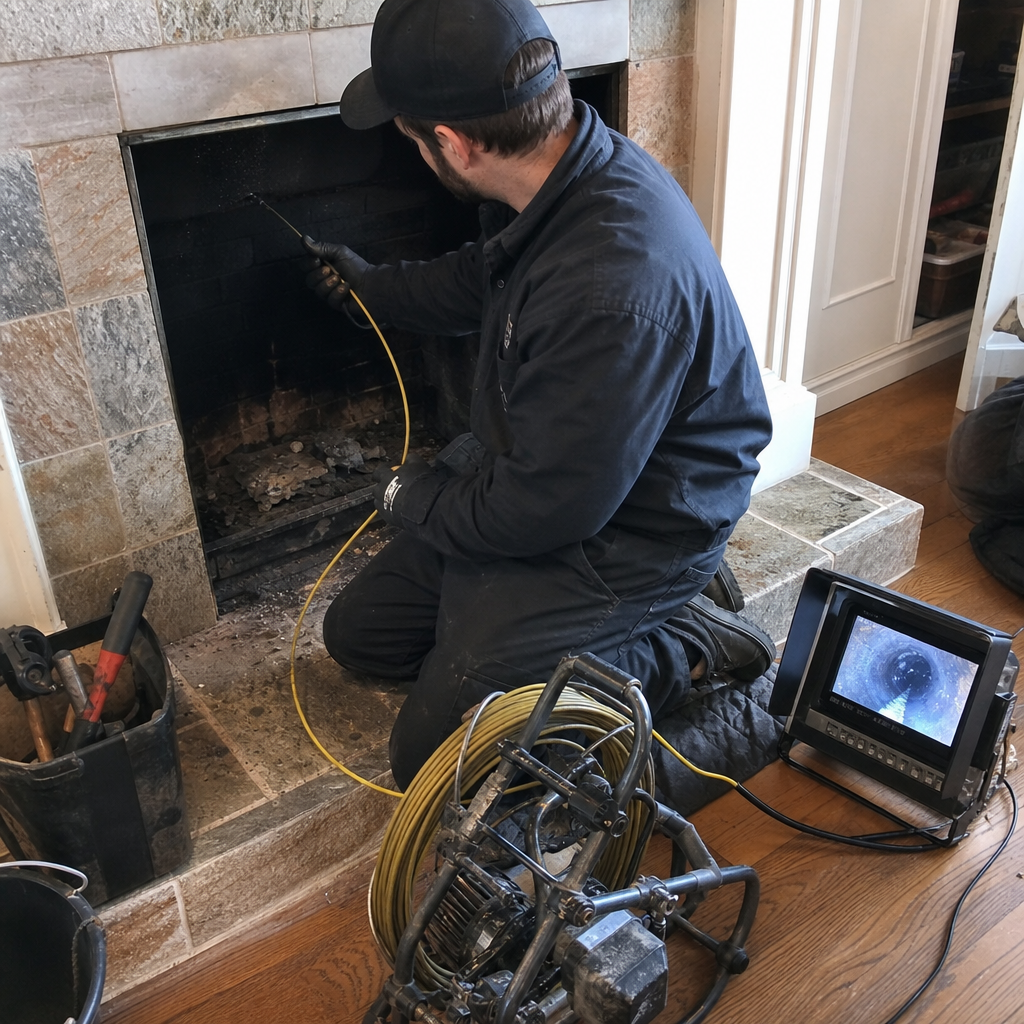
- The Three Things Anthony Checks on Every Bridgeport Job
- DIY Observation vs. When to Call Before Your Sweep
- Common Mistakes to Avoid
- When to Call a Professional
- Frequently Asked Questions
The Bridgeport Heating Season Calendar: Month-by-Month Tasks
Bridgeport’s coastal position on Long Island Sound creates a specific challenge: our winters are milder than Hartford’s interior cold, but the humidity swings are sharper. Salt air accelerates metal component corrosion, and the freeze-thaw cycles between November and March stress masonry more than steady deep freezes would. Here’s how to time your maintenance to match what your chimney actually faces.
September: Pre-Season Professional Sweep and Inspection
This is your non-negotiable appointment. In our experience, Bridgeport homeowners who push this to October often get caught in the first cold snap with a system they haven’t used since March — and that’s when emergency calls spike. Anthony leads every job personally, and in September we’re checking for:
- Creosote accumulation from last season (even “light” use builds glaze)
- Chimney cap integrity — missing or damaged caps let in rain, squirrels, and the leaf debris that clogs flues
- Crown cracks that will expand with first freeze
- Flue liner condition, including gaps or spalling visible from the firebox
- Damper operation and seal
We use Olympia Chimney and Copperfield components for cap and crown replacements — the same materials specified by chimney professionals, not hardware-store substitutes that fail in two seasons.
October: First Fire Protocol
After your professional sweep, your first fire isn’t just ceremonial — it’s diagnostic. Open windows slightly, light a small fire with seasoned hardwood, and observe:
- Does smoke draft upward immediately, or does it linger in the firebox?
- Do you smell smoke in upstairs rooms or the basement?
- Does the fire burn briskly with the damper fully open, or does it struggle?
Any “no” here means call before you burn again. In Bridgeport’s Black Rock and Brooklawn neighborhoods, we’ve found that homes with tighter modern insulation often have negative pressure issues that older, drafty houses don’t — and that affects your first-fire behavior.
November–January: Monthly Owner Checks
During peak burning season, check these items on the first of each month:
- Ash depth: Maintain 1–2 inches of ash for insulation, but remove excess before it touches the grate
- Firebox brick condition: Look for new cracks, white efflorescence (moisture intrusion), or spalling
- Smoke chamber: From the firebox, look upward with a flashlight for black, shiny creosote glaze — the dangerous stage that brushes can’t remove
- Exterior masonry: From ground level, scan for new cracks, missing mortar, or white staining on the chimney face
February–March: Late-Season Vigilance
This is when Bridgeport’s freeze-thaw cycles peak. Water that entered small crown cracks in October has expanded and contracted dozens of times. Check your attic for water stains near the chimney penetration — a leak that shows here means crown or flashing failure that’s worsening.
April–May: Off-Season Maintenance Window
Once you’re done burning, complete these tasks before the humidity of Bridgeport summer sets in:
- Schedule any repairs identified in September — prices are lower, scheduling is flexible, and masonry cures properly in mild weather
- Clean and inspect your chimney cap; replace if corroded (salt air damage shows now)
- Cover or close the damper to prevent humid summer air from entering
- Store remaining firewood off-ground, covered, with airflow — aim for 20% moisture content by next season
June–August: Planning and Fuel Preparation
Order seasoned hardwood now. “Seasoned” means split and stacked for 12+ months — not “dried since spring.” In Bridgeport, we’ve seen homeowners burn construction lumber, pallets, or “seasoned” wood that’s still 40% moisture. That creates the glazed creosote that causes chimney fires. Anthony’s rule: if you didn’t split it last spring, don’t burn it this fall.
Owner-Observable Warning Signs You Can Spot Without a Ladder
You don’t need to climb your roof to catch most chimney problems early. These are the signs Anthony asks Bridgeport homeowners about before every service call — and the ones that should trigger an immediate phone call, not a “wait and see.”
Smoke Rollback Into the Room
Smoke that spills out the firebox opening — even briefly — indicates a draft failure. Causes range from a cold flue (start with a smaller kindling fire) to blocked flue, damaged liner, or negative pressure from exhaust fans. In Bridgeport’s tighter new construction, we’ve seen range hoods and bathroom fans create enough negative pressure to reverse chimney draft. If the problem persists past the first five minutes of fire, stop burning and call.
Draft Reversal on Windy Days
Long Island Sound creates prevailing winds that hit Bridgeport chimneys differently than inland Connecticut. If you smell cold, damp chimney odor on windy days even when not burning, your flue is acting as a reverse air intake — usually because the damper doesn’t seal or the cap is missing/damaged. This wastes heated air and lets moisture accelerate liner deterioration.
Visible Liner Cracks From the Firebox
Shine a flashlight up your flue from the firebox. Clay tile liners show cracks as dark lines against the lighter tile; stainless steel liners show separation at joints or corrosion spots. Any visible gap means combustion gases can enter wall cavities — carbon monoxide risk, not just efficiency loss. In our eight years, we’ve replaced dozens of liners in Bridgeport homes where the homeowner “knew something was wrong” but waited for the annual sweep.
White Efflorescence or Spalling Brick
White powder on exterior brick means water is moving through the masonry and depositing salts. Spalling — brick faces flaking off — means that water is freezing inside the brick and breaking it apart. Both indicate crown, cap, or flashing failure that will accelerate rapidly. Bridgeport’s salt air makes this worse; we’ve seen three-year-old spalling that would take ten years inland.
Unusual Fire Behavior
A fire that “roars” excessively, burns too fast, or requires constant tending often means over-dry wood or excessive draft — but a fire that struggles to stay lit, smolders, or produces excessive smoke points to restricted airflow, glazed creosote, or damper malfunction.
Fuel-Type Specific Checklists: Wood vs. Gas vs. Pellet
Generic checklists treat all chimneys the same. They shouldn’t. Here’s what Bridgeport homeowners need to know based on their actual fuel type.
Wood-Burning Fireplaces and Inserts
This is the highest-maintenance system and the one where owner habits matter most. Anthony’s wood-burning checklist:
- Fuel: Burn only seasoned hardwood (oak, maple, hickory). Softwoods (pine, fir) burn fast and creosote-heavy. Never burn treated lumber, pallets, or painted wood — the chemicals corrode flue liners and release toxic compounds
- Fire construction: Small, hot fires burn more completely than large, smoldering loads. Aim for visible flames, not a bed of glowing coals with smoke
- Monthly: Check for glazed creosote (shiny black, tar-like) versus fluffy soot. Glaze requires professional removal — don’t attempt this yourself
- Annual: Professional sweep with NFPA Level 1 inspection minimum; Level 2 if you’ve changed appliances, had a chimney fire, or are selling the home
Bridgeport-specific note: Homes near the water in Seaside Park or South End often have damper corrosion from salt air that interior Bridgeport neighborhoods don’t. Check damper operation monthly, not just annually.
Gas Fireplaces and Inserts
Gas owners often skip maintenance entirely — “it’s clean burning.” That’s a dangerous assumption. Gas produces water vapor and carbon monoxide; the venting system, not the fuel, determines safety.
- Monthly (burning season): Verify pilot light color — blue with minimal yellow. Yellow flame indicates incomplete combustion and possible venting issues
- Check glass: White film or moisture inside the glass indicates condensation from poor draft or oversized appliance
- Verify exterior vent: Snow, leaves, or animal nests block direct-vent terminals. Bridgeport’s coastal winds drive debris against vents more than inland locations
- Annual: Professional inspection of gas valve, thermocouple, venting, and combustion chamber. We use Gelco and Famco venting components where replacement is needed
Critical difference: Gas systems don’t produce creosote, but they do produce moisture that deteriorates liners from the inside. A “clean” flue can still have a failed liner.
Pellet Stoves
Pellet systems have their own venting (usually 3–4 inch pellet vent, not full chimney flue) but still require:
- Weekly ash pan emptying and glass cleaning
- Monthly hopper and auger inspection for pellet dust accumulation
- Annual professional cleaning of vent pipe, combustion blower, and heat exchanger tubes
- Verification that pellet vent termination meets clearance requirements — Bridgeport’s wind-driven rain can enter low terminations
The Three Things Anthony Checks on Every Bridgeport Job That Homeowners Almost Never Think to Inspect
After eight years and 800+ jobs, these are the inspection points that catch problems other sweeps miss — and that homeowners never think to check themselves.
1. The Smoke Chamber Slope and Parging
The smoke chamber is the area above the damper, below the flue, where smoke collects before entering the narrow flue. NFPA standards require it to slope no more than 45 degrees, with smooth parging (mortar coating). In Bridgeport’s pre-1950 housing stock — common in the East Side, West End, and portions of Black Rock — we find unpargeed, corbeled brick that creates turbulence, creosote buildup, and draft problems. Homeowners can’t see this without a mirror and flashlight from the firebox, and many sweeps skip it. Anthony checks it on every job because it’s where chimney fires often start.
2. The Chimney Crown Wash Slope and Overhang
A proper crown slopes away from the flue at minimum 1/4 inch per foot, with an overhang past the chimney face. Flat or reverse-sloped crowns pool water; insufficient overhang lets water run down the masonry face. From ground level, homeowners can spot obvious cracks but miss the slope problem. In Bridgeport, where we get rain followed by freeze within 24 hours multiple times each winter, crown slope determines whether your chimney survives five years or fifty. We use HeatShield crown repair systems where the existing crown can be saved, full replacement with proper forming where it can’t.
3>3. The Attic Penetration and Framing Contact
This requires entering the attic — which homeowners rarely do, and some sweeps skip. The chimney where it passes through the attic should have proper clearance to combustible framing (typically 2 inches for masonry, following manufacturer specs for prefab). More critically, we look for water staining, charring, or pyrolysis (wood darkening from long-term heat exposure). In a 2022 Black Rock job, Anthony found pyrolyzed attic framing from a liner gap that had been dumping heat for three years — the homeowner’s “annual sweep” from another company had never entered the attic. That job went from sweep to liner replacement and structural repair. Eight years, one specialty teaches you to look where others don’t.
DIY Observation vs. When to Call Before Your Sweep
There’s a clear line between what you should monitor and what requires professional intervention. Here’s Anthony’s guidance for Bridgeport homeowners:
| Task | DIY or Pro? | Notes |
|---|---|---|
| Monthly ash removal | DIY | Use metal container with lid; store outside on non-combustible surface |
| Damper operation check | DIY | Open/close fully; note resistance or grinding |
| Visual firebox inspection | DIY | Look for new cracks, spalling, or white deposits |
| Exterior masonry scan from ground | DIY | Binoculars help; note changes month to month |
| Creosote removal | Professional only | Stage 2+ creosote requires chemical treatment and professional tools |
| Liner inspection/repair | Professional only | Camera inspection needed; replacement requires code knowledge |
| Crown repair/replacement | Professional only | Proper forming, curing, and slope calculation |
| Flashing repair | Professional only | Roof penetration work; improper repair causes leaks |
| Gas valve/thermocouple service | Professional only | Gas line work requires proper training |
The rule: if it involves combustion safety, structural integrity, or fuel connections, call Anthony. Observation is your job; diagnosis and repair is ours.
Common Mistakes to Avoid
- Burning “seasoned” wood that’s still wet. Bridgeport homeowners often buy wood labeled “seasoned” that was split in spring. That’s six months, not twelve. Wet wood smolders, creates glazed creosote, and wastes 30% of potential heat. Buy this spring for next fall, or use a moisture meter — 20% or less.
- Skipping the September sweep because “we barely used it last year.” Even minimal use produces creosote; more critically, animals nest in unused flues, and masonry deteriorates whether you burn or not. One family in the North End skipped two years because they “only burned on Christmas” — we found a blocked flue and a deteriorated liner that cost $3,200 to repair.
- Installing a chimney cap from a hardware store. Big-box caps use light-gauge stainless that corrodes in Bridgeport’s salt air within 3–4 years. Proper caps from Copperfield or Olympia Chimney use heavier gauge, proper mesh sizing for your fuel type, and secure mounting that survives coastal wind.
- Assuming gas means “no maintenance.” We’ve replaced gas liners that failed from condensation corrosion, and found venting blocked by bird nests in “clean” systems. Annual inspection is non-negotiable.
- Ignoring the attic. Water stains, musty smells, or visible chimney framing in your attic mean active leaks or clearance violations. These don’t fix themselves and aren’t caught from the living room.
- Waiting for “the annual appointment” when warning signs appear. Smoke rollback, visible liner cracks, or sudden draft changes mean stop burning and call immediately. The appointment you scheduled for September doesn’t help you in January.
- Using the wrong professional. General handymen, roofers, or HVAC contractors who “also do chimneys” lack the trade-specific training and tools. From annual sweep to full rebuild, chimney work requires dedicated expertise — eight years, one specialty.
When to Call a Professional
Call immediately if you experience smoke entering your home, a chimney fire (roaring sound, dense smoke, hot exterior masonry), or carbon monoxide detector activation. Call before your next fire if you notice any draft change, visible liner damage, new exterior masonry cracks, or water entry. For routine maintenance, schedule your professional sweep and inspection every September — but don’t hesitate to call mid-season if something changes.
Premier Chimney Cleaning Connecticut offers free estimates in Bridgeport. Anthony Perez leads every job personally, and with 800+ homeowner reviews at a 4.7-star average, our track record speaks where competitors rely on marketing claims. From annual sweep to full rebuild, we handle the complete chimney lifecycle — no separate contractors as problems escalate. Call (833) 719-7193 to schedule or discuss what you’re seeing.
Frequently Asked Questions
Professional chimney cleaning and inspection in Bridgeport typically ranges from $200–$350 for a standard sweep with NFPA Level 1 inspection, depending on flue accessibility, creosote severity, and whether the system is wood-burning or gas. Heavily glazed creosote, multiple flues, or Level 2 inspection requirements (camera scan, accessible attic/roof evaluation) increase cost. Call (833) 719-7193 for an exact quote — estimates are free.
Wood-burning systems need annual professional cleaning and inspection, per NFPA 211 standards, regardless of use frequency. Gas systems need annual inspection; cleaning frequency depends on use but every 1–2 years is typical. Pellet stoves need annual professional service plus more frequent owner maintenance. In Bridgeport’s coastal climate, we recommend not exceeding 12 months between professional visits — salt air and humidity accelerate component deterioration even with minimal burning.
Homeowners can remove ash, check damper operation, and perform visual inspections from the firebox. Actual flue cleaning requires professional-grade brushes, rods, and vacuum systems sized to your flue diameter — and the training to recognize what you’re seeing. Stage 2 and 3 creosote (glazed or tar-like) requires chemical treatment before mechanical removal. For safety and proper diagnosis, professional service is the right choice. We’ve seen DIY attempts that compacted creosote, damaged liners, or missed critical defects.
A sweep removes deposits from the flue, firebox, and smoke chamber. An inspection evaluates system condition, clearances, and safety. NFPA defines three levels: Level 1 (visible, accessible components, annual), Level 2 (camera inspection, accessible areas, required for real estate transactions or appliance changes), and Level 3 (destructive investigation, rare). Anthony performs Level 1 with every sweep; Level 2 when indicated. Chimney Cleaning & Sweep in Hartford follows identical standards.
Summer chimney odor usually means creosote deposits absorbing humidity, combined with negative pressure pulling air down the flue. Bridgeport’s summer humidity is the trigger; the underlying cause is usually a missing or damaged chimney cap, poor damper seal, or house pressure imbalance. A proper cap installation and damper repair typically resolve it. The smell is unpleasant but also diagnostic — it tells you your system isn’t sealed.
Repair is occasionally possible for isolated damage using HeatShield cerfractory foam or stainless steel sleeves, but most clay tile liner failures require full replacement. The decision depends on liner material, damage extent, and appliance type. A partial repair to a failed clay tile liner in a wood-burning system is false economy — the remaining tiles continue deteriorating. Anthony evaluates each Bridgeport job individually and recommends the lasting solution, not the cheapest. Chimney Repair in Hartford covers liner replacement scope in detail.
The Bottom Line
Effective chimney maintenance in Bridgeport isn’t about following a generic checklist — it’s about matching your tasks to our coastal climate, your specific fuel type, and your system’s age and condition. The homeowners who avoid emergencies are the ones who: schedule professional service every September, perform monthly owner checks during burning season, burn properly seasoned fuel, and call immediately when warning signs appear rather than waiting for the annual appointment. For The Complete Guide to Chimney Cleaning in Bridgeport and related advice, see our resources. Eight years of Bridgeport chimney work has shown us that pattern recognition — knowing what this climate does to masonry, what salt air does to metal, what specific neighborhoods face — matters as much as technical skill. Anthony Perez brings both to every job he leads.
Ready to schedule your sweep or have questions about what you’re seeing? Call (833) 719-7193 for a free estimate. Anthony leads every job personally, and with 800+ homeowner reviews at a 4.7-star average, you get accountability, not a rotating crew. From annual sweep to full rebuild, Fireplace Services in Hartford and Bridgeport coverage means complete chimney lifecycle care with the same dedicated specialist.
Written by Anthony Perez, Owner & Lead Technician at Premier Chimney Cleaning Connecticut, serving Bridgeport since 2018. Explore more guides & resources on our blog