
Last updated September 3, 2026
How to Hire a Chimney Cleaning Contractor in Bridgeport: A Step-by-Step Guide
Connecticut does not license chimney sweeps the way it licenses electricians or plumbers. That means anyone with a ladder and a brush can legally clean your chimney in Bridgeport — no exam, no apprenticeship, no state oversight. The burden of vetting falls entirely on you, the homeowner. Over eight years of running Premier Chimney Cleaning Connecticut home, Anthony Perez has seen the aftermath: cracked flue tiles missed by $99 “sweeps,” water damage from caps installed wrong in Black Rock, and families talked into full relines they didn’t need. This guide gives you a repeatable vetting process — not generic tips, but the specific questions, red flags, and documentation checks that separate legitimate professionals from operators who’ll be gone by spring.
Quick Answer
To hire a chimney cleaning contractor in Bridgeport, verify CSIA certification as a baseline qualification, confirm the technician carries general liability insurance, demand a written scope of work before any work begins, and check that online reviews mention specific technical details rather than generic praise. Avoid anyone who pressures you into immediate relining, offers cash-only discounts, or refuses to put estimates in writing.
Table of Contents
- Why Vetting Matters More in Bridgeport Than Most Cities
- What CSIA Certification Actually Verifies (And What It Doesn’t)
- The Five Questions That Separate Professionals From Operators
- How to Read Online Reviews for Chimney Companies Specifically
- Red Flags Unique to Chimney Contractors
- What a Legitimate Estimate Must Include in Writing
- Common Mistakes to Avoid
- When to Call a Professional
- Frequently Asked Questions
- The Bottom Line
Why Vetting Matters More in Bridgeport Than Most Cities
Bridgeport’s housing stock creates a perfect storm for chimney problems — and for contractors who profit from homeowners who don’t know what to ask. Our Seasonal Chimney Cleaning Care for Bridgeport: Year-Round Homeowner’s Guide covers how each season affects these aging systems. The city’s mix of pre-war colonials in the North End, 1920s capes in Brooklawn, and mid-century ranches in the East End means flue systems built to codes that predate modern inserts, stainless steel liners, and EPA-certified stoves. Many chimneys in Black Rock and the Hollow were never designed for the heat output of today’s appliances.
Our coastal climate compounds the issue. Bridgeport sits on Long Island Sound, where salt air accelerates masonry deterioration and freeze-thaw cycles from Nor’easters open hairline cracks into structural problems. A contractor who sweeps your flue but doesn’t inspect the crown for spalling, or who misses deteriorated mortar joints in the smoke chamber, leaves you with a false sense of security.
The market itself is fragmented. You’ll find:
- CSIA-certified sweeps who run legitimate, insured operations
- Generalist handymen who bought a rotary sweep kit online and added “chimney cleaning” to their service list
- Out-of-state companies that blanket Connecticut with Google ads, subcontract to whoever answers their phone, and disappear when callbacks come
- Roofing or gutter companies who upsell chimney “inspections” as lead generation for bigger jobs
Eight years, one specialty — that’s the pattern we’ve observed. The contractors who last in Bridgeport are the ones who treat chimney work as their only trade, not a seasonal sideline.
What CSIA Certification Actually Verifies (And What It Doesn’t)
The Chimney Safety Institute of America (CSIA) Certified Chimney Sweep credential is the closest thing to a standard qualification in our unregulated state. Here’s what it actually means: the holder passed a closed-book exam covering NFPA 211 standards, combustion basics, and inspection protocols, and recertifies every three years with continuing education or re-examination.
That’s real. It’s also the floor, not the ceiling.
CSIA certification does not verify:
- That the certified individual will be the one on your roof — many companies employ one certified sweep and send uncertified technicians to jobs
- Current insurance coverage — certification and liability insurance are separate systems with separate expiration dates
- Hands-on experience with your specific system — a sweep certified last month who has cleaned thirty chimneys operates differently from one with eight years of pattern recognition across hundreds of flue configurations
- Financial stability or business longevity — the credential attaches to a person, not a company
In Bridgeport, we regularly see CSIA-certified sweeps who subcontract to uninsured laborers, or who perform Level 1 inspections when a Level 2 is clearly indicated by visible damage. Certification tells you someone passed a test. It does not tell you who will actually show up at your door, whether they carry workers’ compensation, or whether the company will honor a warranty claim two years later.
Ask specifically: “Will the CSIA-certified sweep be the person performing the work, or supervising?” Anthony leads every job at Premier Chimney Cleaning — that’s a different accountability structure than a certification held by an owner who hasn’t touched a brush in years.
The Five Questions That Separate Professionals From Operators
These questions work because they force specificity. Vague answers or deflections are data — they tell you exactly what kind of operation you’re dealing with.
1. “What level of inspection does my chimney need, and why?”
NFPA 211 defines three inspection levels. A professional should explain which applies to your situation without prompting:
- Level 1: Annual maintenance, no changes to appliance or fuel type, no known problems — visual inspection of accessible portions
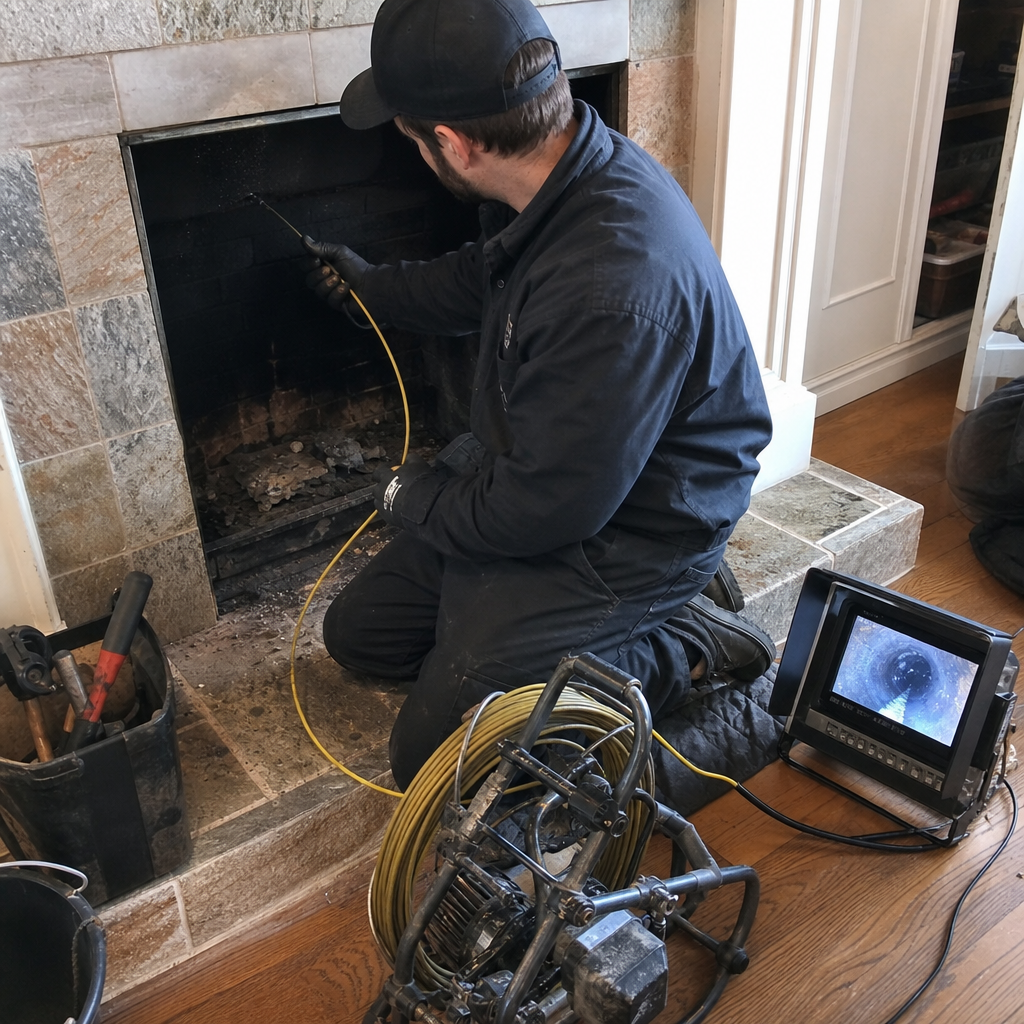
- Level 2: Property sale, new appliance installation, known damage, or change in fuel type — includes video scan of flue interior, accessible portions of attic and basement
- Level 3: Suspected hazard requiring demolition of components to access concealed areas
If you’re buying a home in Bridgeport’s North End or scheduling your first sweep in a decade, Level 2 is the appropriate baseline. A contractor who defaults to Level 1 without asking about your situation is either cutting corners or doesn’t know the standard.
2. “Can you walk me through what you’ll do if you find cracked flue tiles?”
This reveals diagnostic depth. A professional will explain the difference between isolated spalling (repairable with HeatShield cerfractory sealant) and widespread deterioration requiring stainless steel relining with a product like DuraFlex. They’ll mention that cracked flue tiles in Bridgeport’s older homes often correlate with oversized flues originally built for coal or oil conversion — a pattern recognition point that separates experienced sweeps from brush-and-vac operators.
3. “What brands of liner and cap do you install, and why?”
Generic answers (“stainless steel liner,” “standard cap”) signal a contractor who sources from jobbers or hardware stores. Specificity matters: we use Gelco and Famco caps, Olympia Chimney components, and Copperfield accessories because these are the product lines specified by chimney professionals for coastal Connecticut’s corrosion environment. A contractor who can’t name their suppliers likely can’t stand behind their materials.
4. “Will I receive a written report with photos?”
Verbal-only findings are unverifiable and unactionable. Professional documentation includes dated photos of the flue interior, crown condition, and any defects, plus written recommendations with NFPA 211 citations. This protects you and creates a baseline for future inspections.
5. “What’s your process if I have a problem after the work is complete?”
Listen for a specific callback protocol — not “call the office” but “Anthony returns all callback calls personally within 24 hours” or similar. At 800+ reviews with a 4.7-star average, our callback volume is measurable; how a company handles dissatisfied customers reveals more than how they handle the easy jobs.
How to Read Online Reviews for Chimney Companies Specifically
Not all five-star reviews are equal. For chimney contractors, the content of the review matters more than the star rating — and certain patterns signal real workmanship versus volume marketing.
Reviews that indicate legitimate technical work:
- Mention specific components: “found cracked crown,” “installed stainless liner,” “repointed above the roofline”
- Describe the inspection process: “used a camera,” “showed me photos of the flue,” “explained why Level 2 was necessary”
- Note follow-up behavior: “called back when I had questions about the damper,” “returned to adjust the cap after the first rain”
- Reference time elapsed: “still no leaks two winters later,” “annual sweep for three years now”
Reviews that should raise questions:
- Generic enthusiasm with zero technical detail: “great service, highly recommend” — often incentivized or templated
- Clusters of reviews posted within short windows, especially from accounts with only one review — possible review farm activity
- Complaints about upselling without context — sometimes legitimate, sometimes from homeowners who refused necessary work
- No negative reviews at all — statistically improbable for any company with significant volume; 800+ homeowners have reviewed us, and the 4.7 average reflects real variation in experience and expectation
In Bridgeport specifically, check whether reviews mention neighborhood context — “our cape in Brooklawn,” “the colonial on Capitol Avenue” — which indicates local, repeat customers rather than one-off travelers. We serve the same Bridgeport streets year after year; our review history reflects that geographic concentration.
Red Flags Unique to Chimney Contractors
Certain warning signs are specific to chimney work and don’t apply to other home services. Watch for these:
- Pressure to reline immediately. Stainless steel relining is necessary for some systems, but it’s a significant investment. If a contractor diagnoses “unsafe to use” and demands a relining quote on the spot without camera documentation, get a second opinion. In Bridgeport, we’ve found that roughly one in three “emergency reline” recommendations from other companies are premature — cracked tiles that are repairable, or minor spalling that doesn’t yet compromise safety.
- Cash-only discounts with no receipt. This eliminates your paper trail for warranty claims and often indicates uninsured operation. Legitimate contractors accept multiple payment methods and provide itemized invoices.
- No written scope of work. Verbal agreements for chimney work are unenforceable and dangerous. What exactly is included: sweep, inspection, report, photos? What happens if they find damage? A professional provides this before work begins.
- Refusal to access the roof. Some “sweeps” clean from the bottom only, using a shop vac and a hand brush. Complete cleaning and inspection require roof access to examine the crown, cap, and exterior masonry — non-negotiable in Bridgeport’s climate where crown deterioration is common.
- Quotes that are dramatically below market. In Bridgeport, legitimate chimney sweeping ranges from approximately $150–$300 for a Level 1 inspection and cleaning, with Level 2 inspections running $250–$450 depending on accessibility. Quotes at $79 or $99 often indicate bait-and-switch tactics or corner-cutting that skips critical steps.
- Generalist credentials presented as chimney expertise. “Licensed contractor” sounds authoritative, but Connecticut’s Home Improvement Contractor registration covers any residential construction work over $200 — it verifies nothing about chimney-specific knowledge. Ask for chimney-specific training and certification.
What a Legitimate Estimate Must Include in Writing
A proper chimney estimate is a scope-of-work document, not a price scribbled on a business card. Before any work begins, you should receive:
- Company information: Legal business name, physical address (not just a phone number), and date of estimate
- Detailed scope: Specific services to be performed — “Level 2 inspection with video scan of flue liner,” not “chimney checkup”
- Equipment and materials: If repairs are recommended, the specific products proposed — “stainless steel relining with DuraFlex liner” or “crown repair with HeatShield”
- Pricing structure: Line-item costs for each component, not a single lump sum that obscures what you’re paying for
- Timeline: When work will begin and estimated duration
- Warranty terms: What is covered, for how long, and what voids coverage
- Payment terms: Deposit requirements, acceptable payment methods, and final payment schedule
If a contractor refuses to put any of this in writing, that refusal is itself information. In our experience, the operators who balk at written estimates are the same ones who disappear when problems emerge. Anthony signs every estimate personally — it’s how we do business.
For larger projects in Bridgeport — liner replacement, crown rebuilds, or structural work — we also provide before-and-after photo documentation as part of our standard process. This isn’t extra; it’s how we verify that the work described was the work performed.
Common Mistakes to Avoid
- Hiring based on lowest price alone. The $99 sweep that misses a deteriorated flue liner costs far more than the $225 sweep that catches it early. In Bridgeport’s competitive market, unsustainable pricing often correlates with uninsured operation or incomplete work.
- Assuming a “chimney sweep” and a “chimney contractor” are the same. Sweeping is maintenance; contracting encompasses diagnosis, repair, and structural work. If your inspection reveals damage, you’ll need a company that handles both — from annual sweep to full rebuild — not a referral to another vendor.
- Skipping inspection because “it looks fine.” Creosote buildup and flue damage occur inside the system, invisible from the firebox or roofline. We’ve found significant hazards in chimneys that appeared perfectly functional to the homeowner.
- Neglecting to verify insurance independently. Ask for a certificate of insurance directly from the provider, not just a photocopy from the contractor. General liability and workers’ compensation are separate coverages; confirm both.
- Waiting until fall to schedule. Bridgeport’s chimney contractors book heavily from October through December. Scheduling in spring or summer ensures availability, allows time for any necessary repairs before heating season, and often yields more thorough inspections without weather pressure.
- Ignoring neighborhood-specific factors. Homes near the waterfront in Black Rock face accelerated cap and crown corrosion from salt air. Properties in the North End with original 1920s construction may have unlined brick flues incompatible with modern inserts. A contractor who doesn’t ask about your home’s location and age isn’t performing a complete assessment.
- Failing to establish a baseline. Your first professional inspection creates the reference point for all future maintenance. Without dated photos and documentation, you can’t track deterioration or prove pre-existing conditions for insurance claims.
When to Call a Professional
Schedule a professional chimney inspection immediately if you notice smoke backing up into the room, a strong odor even when the fireplace isn’t in use, visible cracks in the exterior masonry, or white efflorescence staining on the chimney face. After any chimney fire — even a small one — a Level 2 inspection is mandatory before further use. In Bridgeport, we also recommend proactive inspection before purchasing any home with a fireplace, and annually for actively used systems regardless of apparent condition — see our Chimney Cleaning & Sweep Maintenance Checklist for Bridgeport Homeowners for a full schedule.
Chimney Cleaning & Sweep in Hartford and our Bridgeport service area share similar coastal climate challenges, though Bridgeport’s older housing stock presents unique flue configuration issues. Whether you need routine maintenance or suspect structural concerns, Premier Chimney Cleaning Connecticut offers free estimates in Bridgeport — call (833) 719-7193 to speak directly with Anthony about your system.
Frequently Asked Questions
A professional chimney sweep and Level 1 inspection in Bridgeport typically ranges from $150 to $300, while a Level 2 inspection with video scan runs $250 to $450 depending on roof accessibility and flue configuration. Prices below this range often indicate incomplete service or uninsured operators. Call (833) 719-7193 for an exact quote — estimates are free.
The National Fire Protection Association recommends annual inspection for all chimney systems, with cleaning frequency determined by use and fuel type. In Bridgeport, we find that homeowners burning seasoned hardwood 2–3 times weekly typically need annual sweeping, while occasional users may extend to every two years with inspection. Call (833) 719-7193 to schedule a baseline inspection and establish the right interval for your usage pattern.
No — Connecticut does not license chimney sweeps at the state level, which means anyone can legally offer chimney cleaning without certification, training, or insurance. For details on local requirements, read our guide to Chimney Cleaning Permits, Codes & Inspections in CT: What You Need to Know. CSIA certification is voluntary and represents the industry’s primary credential, but homeowners must verify it independently and confirm the certified individual will perform the actual work. Call (833) 719-7193 to discuss our certification and inspection protocols.
A chimney sweep performs cleaning and basic visual assessment, while a chimney inspector conducts formal evaluation per NFPA 211 standards, potentially including video scanning and written documentation. In practice, reputable companies like Premier Chimney Cleaning combine both functions — cleaning follows inspection, and findings are documented with photos. We handle everything from annual sweep to full rebuild, so you’re not shuffled between vendors when problems are found.
DIY chimney cleaning with homeowner-grade brushes is possible for straightforward systems, but it carries significant limitations and safety considerations. Without video inspection equipment, you cannot assess flue liner condition; without roof access and proper fall protection, you cannot evaluate the crown, cap, or exterior masonry. In Bridgeport’s older housing stock, we’ve found hidden damage in systems that appeared clean and functional from the firebox. For safety-critical components, we recommend professional evaluation — call (833) 719-7193 to discuss what’s appropriate for your situation.
You likely need a chimney liner if your flue is unlined clay tile with visible cracks or gaps, if you’re installing a new appliance with different venting requirements, or if your chimney was built before 1940 and never updated. In Bridgeport’s pre-war housing, unlined or deteriorated flues are common — we regularly find them in Brooklawn and North End properties. A Level 2 inspection with video scan provides definitive assessment; call (833) 719-7193 to schedule.
The Bottom Line
Hiring a chimney contractor in Bridgeport requires active vetting because the state provides no regulatory shortcut. Verify CSIA certification as a starting point, not an endpoint. Ask the five questions that force specificity. Read reviews for technical detail, not star counts. Demand written estimates with line-item scopes. And recognize that the cheapest quote often carries hidden costs — missed damage, uninsured liability, or contractors who won’t answer callbacks.
Eight years of chimney-only work in this market has taught us that the homeowners who ask hard questions upfront are the ones who get lasting, safe results. From annual sweep to full rebuild, the accountability structure matters: Anthony leads every job, signs every estimate, and answers when the phone rings. That’s the difference between a contractor with a name on the line and an operator with a ladder and a brush.
Ready to have your Bridgeport chimney evaluated by a specialist? Browse our more guides & resources, then call Call (833) 719-7193 for a free estimate. Anthony Perez handles every inspection personally, and we’ll provide written documentation you can use for insurance, resale, or your own maintenance records.
Written by Anthony Perez, Owner & Lead Technician at Premier Chimney Cleaning Connecticut, serving Bridgeport since 2018.