
DuraFlex Chimney Cleaning in Bristol, CT | Premier Chimney Cleaning Connecticut
DuraFlex service in Plainville and Bristol, CT typically runs $280–$450 for cleaning and inspection, with most appointments completed same-day or next-day. What makes our DuraFlex work different here is Bristol’s industrial-era housing stock—those oversized masonry chimneys built for coal furnaces in the 1880s–1930s tear through liners faster than modern construction ever would. We see it constantly in Forestville and downtown blocks. Call (833) 719-7193 for a free estimate.
Why Bristol Residents Choose Us for DuraFlex Service
Anthony Perez leads every job personally. He’s the one on your roof, not a subcontractor we found that morning. Eight years specializing exclusively in chimney work means he’s seen DuraFlex liners in every condition Bristol’s old housing stock can create—pitted from Pequabuck River moisture, deformed from trapped condensation in double-flue stacks, choked with creosote in flues that haven’t been properly sized since the coal era.
We source genuine DuraFlex parts directly from regional distributors. No hardware-store substitutes. When a liner’s beyond economical repair, we tell you straight up and recommend proper replacement with correct sizing—especially critical in Bristol, where mismatched flues are the rule, not the exception. Anthony grew up in New Haven’s Fair Haven neighborhood, trained in building systems at Gateway Community College, and apprenticed under a veteran sweep who drilled into him that a chimney is only as safe as the person willing to look at it honestly. That stuck. His wife’s right—he does talk about flue tiles the way other people talk about sports.
800+ homeowners have reviewed us at a 4.7-star average. That volume matters. It’s not a handful of curated testimonials; it’s a sustained record of showing up, doing the work, and explaining what we found without padding the invoice.
Common DuraFlex Chimney Cleaning Problems We Solve in Bristol
- Corrosion at the bottom three feet from moisture wicking. Bristol’s high water table near the Pequabuck River corridor pulls groundwater up through foundation masonry. We regularly find DuraFlex 304 liners with severe pitting right at the cleanout tee—sometimes within four years of installation. The 316Ti alloy holds up better here, but only if the annular space is sealed properly.
- Liner deformation in double-flue stacks. In Forestville and the mill-era neighborhoods near downtown, furnace flues and fireplace flues often share one brick chase. Condensation gets trapped between them, heating and cooling the DuraFlex liner unevenly. The result is waviness, sagging, and eventual separation at the collar—damage that shows up on Level 2 inspection but gets missed by a basic sweep.
- Rapid creosote accumulation in oversized flues. Bristol’s worker cottages and two-families were built with massive chimneys for coal furnaces. When those got converted to oil or gas without resizing, the flue became too large for the appliance. The DuraFlex liner runs cooler, condensation forms, and creosote layers build fast—sometimes requiring cleaning twice per heating season instead of annually.
- Improper DuraFlex sizing after fuel conversions. We see this on Federal Hill and in older downtown blocks: a liner installed for oil heat that’s suddenly wrong for a new gas boiler. The flue gases are cooler, move slower, and the liner diameter that worked before now creates draft problems. Anthony checks appliance specs against liner diameter every time—it’s not a detail to eyeball.
- Water infiltration through spalled crown mortar. The Pequabuck River’s moisture load accelerates mortar deterioration in Bristol’s pre-1930 brick. Water gets behind the DuraFlex liner, rusts the stainless from the outside in, and pools at offsets where the liner meets clay tile transitions. Chimney waterproofing is often the difference between a liner that lasts 15 years and one that fails in 7.
DuraFlex Service in Bristol: What Local Conditions Mean for Your Equipment
Bristol’s identity as Connecticut’s “Clock City” produced dense blocks of worker housing from roughly 1880 to 1930, most with oversized masonry chimneys originally built for coal furnaces. When those got converted to oil heat, the clay tile liners were often removed entirely—left as bare brick flues that now tear through improperly sized DuraFlex liners within five to seven years. This isn’t a theoretical problem. In Forestville and the historic downtown, we pull liners that look like they’ve been through a shredder because the flue was never properly dimensioned for the appliance, and the rough brick surface abraded the stainless from the outside while acidic condensation ate it from the inside.
The double-flue stack configuration common in these neighborhoods makes it worse. Two flues sharing one chase create a thermal bridge—one liner heats, the other stays cool, condensation forms in the gap, and the DuraFlex liner experiences temperature cycling that deforms the corrugations. We’ve replaced 304 liners in this exact scenario and switched homeowners to 316Ti with proper insulation because the basic alloy couldn’t survive the microclimate that Bristol’s housing stock creates. I’d rather give you the straight answer on the roof than a comfortable one at the bottom of the ladder.
DuraFlex Models & Products We Service in Bristol
We work with the full DuraFlex line: the 304 alloy for standard applications, 316Ti for high-corrosion environments like Bristol’s river-adjacent properties, CFlex for tight offsets and relining jobs, and the IK insulated system for exterior chimneys and double-flue stacks where temperature stability matters. Our regional distributor relationship means we don’t wait weeks for collars, tees, or termination caps—critical when a failed liner means no heat in January.
We use DuraFlex, not aftermarket substitutes that claim compatibility. The corrugation pitch, alloy composition, and collar geometry are specific, and mixing brands in a repair is asking for a callback. When we recommend replacement over repair, it’s because we’ve measured the damage and calculated the odds—and in Bristol’s mismatched flues, replacement with correct sizing usually wins.
DuraFlex Service Pricing in Bristol
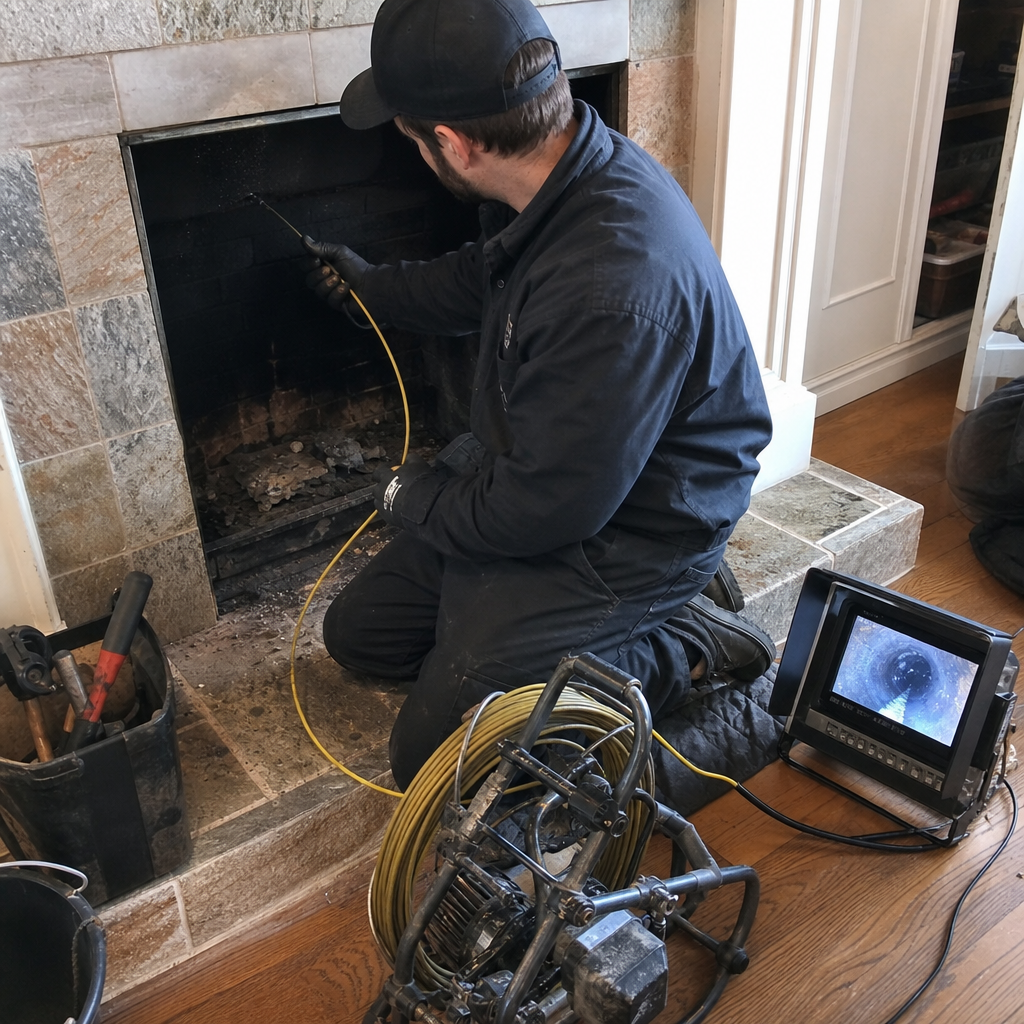
DuraFlex chimney cleaning and Level 2 inspection in Bristol typically runs $280–$380 for standard flue configurations. Double-flue stacks or liners requiring camera inspection for deformation assessment add $80–$120. Full liner replacement with proper DuraFlex 316Ti sizing ranges $2,800–$4,200 depending on flue height, access difficulty, and whether crown rebuild or waterproofing is needed.
What drives cost: flue length, number of offsets, condition of existing connectors, and whether we’re working in a chase that needs structural repair before the liner goes in. Bristol’s older homes often surprise us with hidden clay tile collapses or unlined sections that weren’t visible from below. Our free estimate includes a full camera inspection—no guesswork, no pressure. Call (833) 719-7193 to schedule; estimates are free and we’re usually there within 48 hours.
Serving Bristol, CT — Our Local Coverage Area
We’re based in the Bristol area and know this community well, and we also offer DuraFlex repair in Terryville. Use the map below to see our full service coverage — if you’re nearby, we can almost certainly help.
FAQs — DuraFlex Chimney Cleaning in Bristol
My Bristol home was built in 1920 and has a double-flue stack. Can DuraFlex liners be installed in each flue without rebuilding the crown?
Yes, in most cases. We measure the chase dimensions and flue separation first—there needs to be enough masonry between flues to maintain structural integrity. In Forestville and downtown Bristol, we’ve done this exact installation dozens of times, often using DuraFlex IK with insulation to control the condensation that double-flue configurations trap, similar to our DuraFlex service in Wolcott. Call (833) 719-7193 and we’ll assess your specific chase geometry.
How often should a DuraFlex liner be cleaned in Bristol’s climate?
Annual cleaning is the baseline for most Bristol homes, but oversized flues converted from coal or oil often need twice-yearly service—October before heating season and March after heavy use. The Pequabuck River corridor’s moisture load means creosote forms stickier, denser deposits that don’t sweep out as easily. If you’re burning oil in a pre-1930 chimney, ask us about a cleaning schedule matched to your actual buildup rate. Call (833) 719-7193 to set up a plan.
Why does my DuraFlex liner show rust spots after only 3 years? I live near Bristol Center. Is this normal?
No, it’s not normal—and Bristol Center’s proximity to the river makes this a pattern we recognize immediately. The rust isn’t on the liner surface; it’s bleeding through from behind, where water infiltration through crown cracks or spalled mortar is contacting the outer liner wall. The 304 alloy resists internal corrosion fine, but external water exposure with Bristol’s freeze-thaw cycling accelerates failure. We need to inspect the crown, flashings, and waterproofing before the liner damage becomes irreversible. Call (833) 719-7193 for an urgent inspection.
My chimney in Forestville has a DuraFlex liner that was installed when converting from coal to oil. Now I’m switching to gas. Do I need a new liner?
Almost certainly yes. Gas appliances produce cooler flue gases that move slower and condense more readily. The liner diameter and alloy that handled oil combustion will likely be oversized and under-specified for gas, creating draft problems and rapid corrosion. We size DuraFlex liners to the appliance BTU rating and fuel type, not the existing flue. Forestville’s double-flue stacks make this especially critical—wrong sizing in one flue can backdraft into the other. Call (833) 719-7193 for a proper sizing calculation.
I see water stains near my chimney crown after heavy rain. Does this affect my DuraFlex liner?
Yes, and faster than most homeowners expect. Water behind the liner creates external corrosion that isn’t visible until failure. In Bristol’s climate, with moisture from the Pequabuck River and freeze-thaw cycles from October through April, crown leaks destroy liners from the outside in. We include crown condition assessment in every Level 2 inspection and offer chimney waterproofing as preventive protection. Catching it now saves the liner. Call (833) 719-7193 for a free inspection.
Service Areas Near Bristol
We serve Bristol’s 06010 and 06011 ZIP codes directly, with regular our DuraFlex services extending to Hartford for downtown multi-family relining, New Haven where Anthony’s roots run deep, Waterbury for similar industrial-era housing stock, and Riverside for river-adjacent properties facing comparable moisture challenges. Same-day availability varies by season; call to confirm.
Book Your DuraFlex Service in Bristol Today
Anthony Perez handles every DuraFlex cleaning, inspection, and DuraFlex repair in Plymouth and Bristol personally. Eight years, one specialty, 800+ reviews, and a straightforward approach: we tell you what we found, why it matters, and what it’ll take to fix it right. Same-day appointments available for urgent draft or leak issues. Call (833) 719-7193 now.
Written by Anthony Perez, Owner at Premier Chimney Cleaning Connecticut, serving Bristol since 2016.