
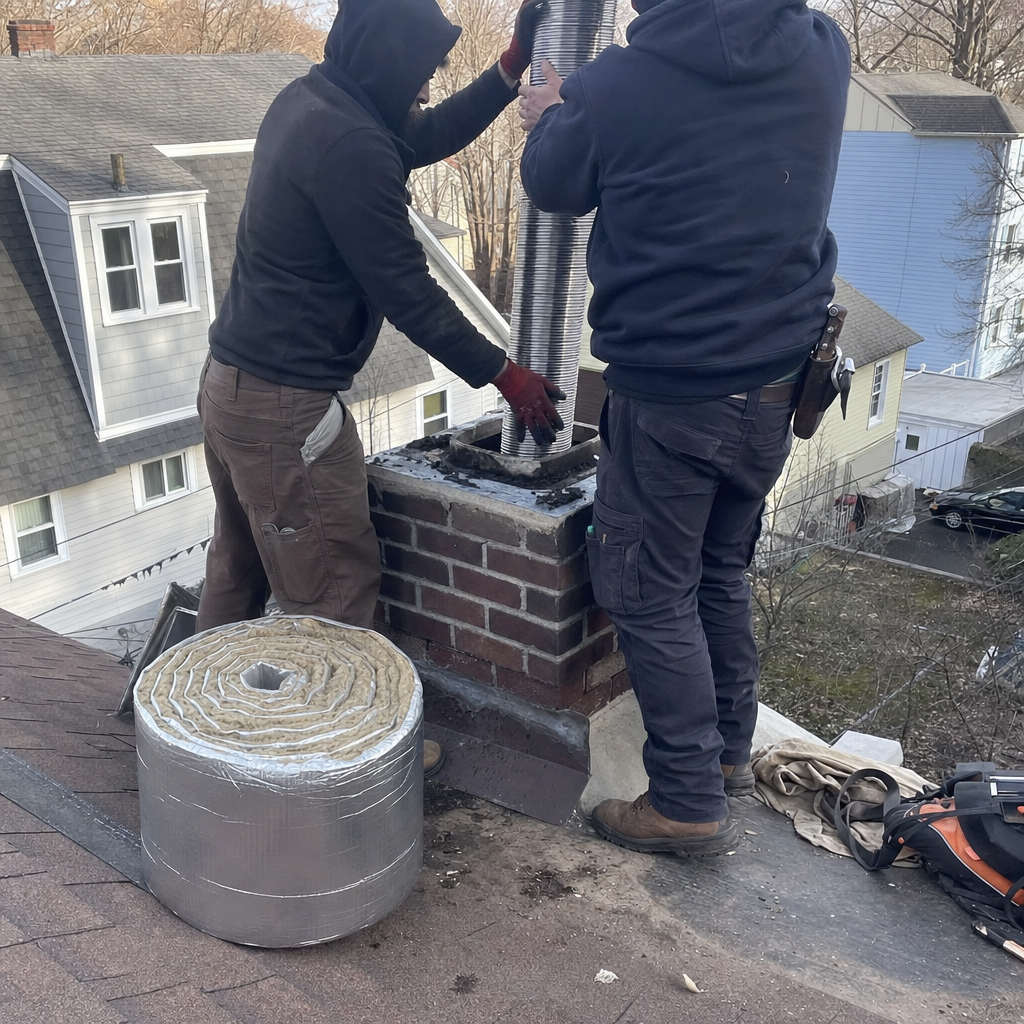
Fast, Reliable Chimney Liner & Rebuild Across Cromwell
Chimney liner replacement and structural rebuilds in Cromwell, CT typically run $2,800–$8,500 depending on scope, and most projects are completed within one to three days. If your flue is showing signs of failure, Anthony Perez and our Chimney Liner & Rebuild team can diagnose the issue and start work fast — we’re familiar with the river-valley conditions that age Cromwell chimneys ahead of schedule. Call (833) 719-7193 for a free estimate.
We’ve been climbing Cromwell roofs for eight years, and the pattern is unmistakable: homes near the Connecticut River, especially in the neighborhoods off Dividend Road and the lower-elevation streets toward the water, show mortar and liner damage that inland towns simply don’t match. The persistent ground fog, higher humidity, and brutal freeze-thaw cycles in the river valley mean a 35-year-old chimney here often looks older than a 50-year-old chimney in Berlin or Meriden. That’s not theory — it’s what we find on every ladder set.
Cromwell’s housing stock tells the same story. The Cape Cods, split-levels, and colonials built from the 1960s through the 1980s frequently have original single-wythe masonry chimneys designed for oil-fired heating. When homeowners convert to gas or add a wood-burning insert, those oversized, unlined flues become a safety and code problem. We’ve handled this exact scenario on Shunpike Road, on Main Street, and throughout the Westwood section — each time matching the new appliance to a properly sized liner system.
Why Premier Chimney Cleaning Connecticut Is Cromwell’s Preferred Chimney Liner & Rebuild Company
Eight years, one specialty. Anthony Perez leads every job personally — not a subcontractor, not a seasonal hire. When you call (833) 719-7193, you’re speaking to the person who will be on your roof, accountable for the work.
Our reputation in Cromwell is built on volume and consistency. 800+ homeowners have reviewed us at a 4.7-star average — that’s not a curated handful of testimonials, it’s a sustained record across hundreds of completed liner installs, repairs, and rebuilds. Cromwell customers specifically mention our willingness to explain what the river-valley climate is doing to their chimney, not just quote a price and leave.
Response time matters when a liner fails mid-season. We typically schedule Cromwell appointments within 48–72 hours, and emergency calls — smoke backing up, detached liner sections after a storm, visible crown collapse — get same-day or next-morning priority. We know the local roads, the permit office at Cromwell Town Hall, and the specific failure patterns this town’s microclimate produces.
Our Chimney Liner & Rebuild Services in Cromwell
Stainless Steel Liner Installation
We install rigid and flexible stainless steel liners using DuraFlex and Olympia Chimney systems — the same products specified by chimney professionals nationwide, not hardware-store substitutes. For Cromwell’s gas conversions and wood-burning inserts, a properly sized stainless liner is often the code-compliant fix for an original oil-flue chimney. The 316Ti alloy we specify resists the acidic condensation that forms when river-valley humidity meets cooler flue gases. We’ve installed these systems throughout the Westwood neighborhood and along Main Street, where 1970s colonials dominate.
Flexible Liner Systems
Flexible liners solve offset flues and tight smoke chambers that rigid pipe can’t navigate. In Cromwell’s older Cape Cods with multiple bends — common in the Dividend Road area — a DuraFlex flexible liner with proper insulation maintains draft while conforming to existing masonry. The key is correct sizing for the appliance. A flex liner oversized for a modern gas insert will cool too fast, causing condensation that accelerates corrosion in this already-moist climate.
Liner Replacement
Replacement becomes necessary when existing liners crack, separate at joints, or delaminate. We see this frequently in Cromwell after hard winters: freeze-thaw expansion inside a compromised flue shatters terra cotta or collapses older flex liners. Last season, we replaced a deteriorated stainless steel liner on a Cape Cod near Dividend Road where freeze-thaw cycles had collapsed the old flex liner, and installed a DuraFlex system with heat-resistant insulation. The homeowner noted the accelerated moisture damage from river valley fog after their previous chimney cleaning revealed moss on the north-facing flue.
Partial Chimney Rebuild
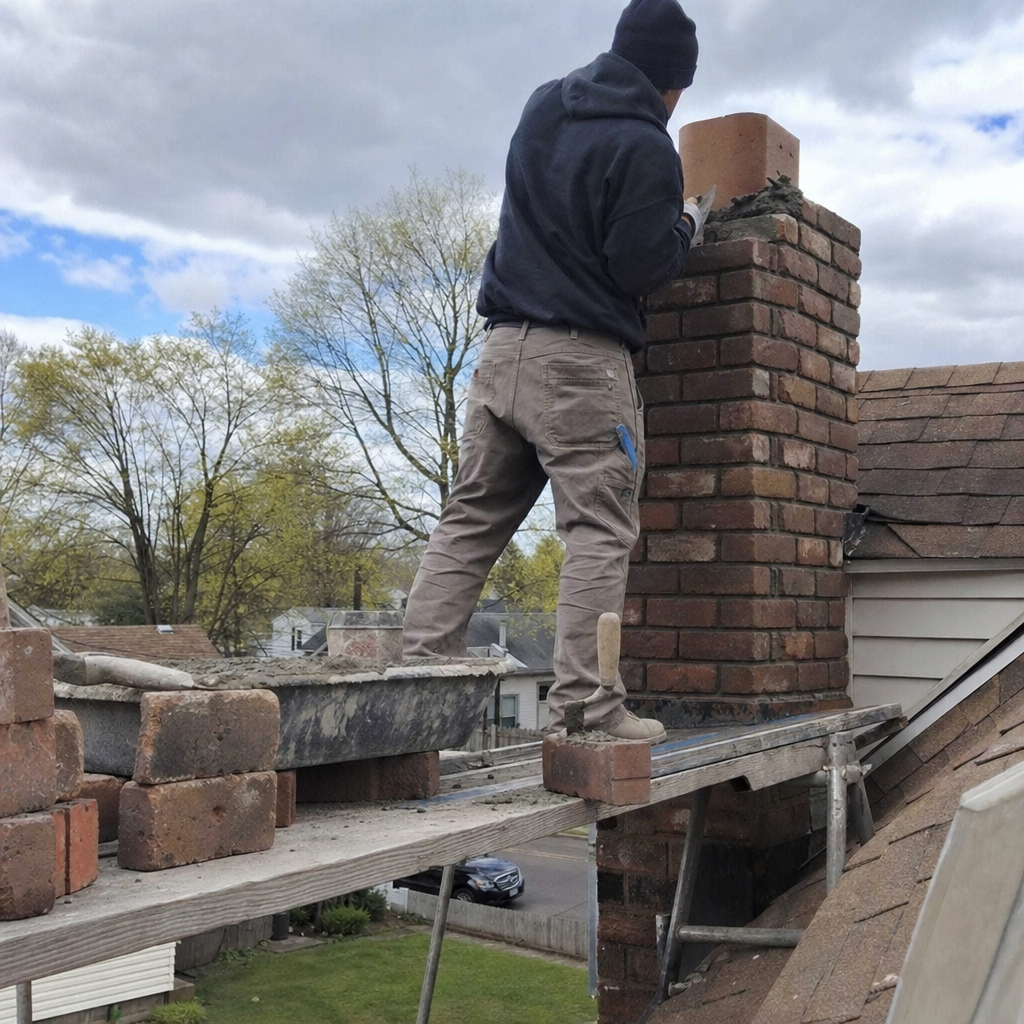
When the crown, top courses, or upper flue are compromised but the lower structure is sound, a partial rebuild restores integrity without the cost of full demolition. Cromwell’s freeze-thaw cycle — dozens of events per winter, amplified by river moisture — heaves crowns and spalls brick at the top third of the chimney. We remove damaged courses, rebuild with matching brick where possible, and install a proper concrete crown with drip edge and waterproofing. This is often the right call for 1980s split-levels in the Shunpike Road corridor where the lower chimney remains structurally sound.
Full Chimney Rebuild
Complete rebuilds address structural failure: leaning stacks, widespread spalling, separated wythes, or liner systems too compromised for retrofit. In Cromwell, we see this on chimneys that have endured years of river-valley moisture without maintenance. Anthony Perez manages these projects directly, from structural assessment and permit application through final inspection. We use HeatShield refractory mortar and Gelco components where specified, and rebuild to current code with proper clearance to combustibles and correctly sized flue for the appliance.
Liner Repair
Not every compromised liner needs full replacement. Localized cracks, minor joint separation, or surface spalling in terra cotta flues can sometimes be addressed with HeatShield cerfractory resurfacing or targeted stainless section replacement. This is particularly relevant for Cromwell homeowners with recently installed liners where a single section failed due to storm damage or improper initial installation. We inspect with a camera, show you the footage, and recommend repair only when it meets code and safety standards.
What happens when you call
- 1
A real person answersNo phone trees — you reach a local pro.
- 2
You get an upfront price rangeHonest numbers before anyone is dispatched.
- 3
A background-checked tech heads outLicensed & insured, dispatched right away.
- 4
You approve before work beginsNothing starts until you say go.
Trusted Brands We Service in Cromwell
We don’t use substitutes. Our Cromwell installs specify DuraFlex flexible liners, HeatShield resurfacing systems, and Gelco caps and components — brands that chimney professionals recognize and that meet or exceed NFPA 211 standards. We maintain relationships with regional distributors, which means faster turnaround on specialty parts and no delays waiting for back-ordered materials. When a Cromwell customer needs a liner replacement before heating season, that supply chain matters.
Common Chimney Liner & Rebuild Problems We See in Cromwell Homes
- Inadequate wind-rated liner connections that detach during nor’easters. Cromwell’s exposed river-valley position catches sustained winds that inland towns don’t experience. Liner top connections installed without proper storm collars or support brackets can pull free, causing smoke backdraft into living spaces. We inspect these connections on every service call and upgrade where needed.
- Unlined or improperly sized flues from original 1960s oil-fired systems. The Cape Cods and split-levels built during Cromwell’s suburban expansion have chimneys designed for lower-temperature oil exhaust. Convert to gas or add a wood insert without relining, and the flue is oversized, too cool, and prone to acidic condensation. It’s a code violation and a safety hazard we correct regularly.
- Missing or failed crown seals that allow river-moisture intrusion. Cromwell’s humidity and fog saturate porous concrete crowns, especially on north-facing exposures. Water enters, freezes, expands — and by spring, the crown is cracked and the top courses are spalling. Spring cleanings here routinely reveal heaved or cracked crowns that formed over the winter.
- Biological growth signaling hidden moisture damage. Homes on lower-elevation streets near Dividend Road often show moss and algae staining on north-facing chimney faces. That’s not just cosmetic — it’s a visible indicator of moisture infiltration inside the flue that accelerates liner corrosion and mortar decay. Local techs know to lead with this visual when walking the property.
Pricing for Chimney Liner & Rebuild in Cromwell, CT
| Service | Typical Range in Cromwell |
|---|---|
| Liner inspection & camera evaluation | $180–$260 |
| Flexible stainless liner installation (gas insert) | $2,800–$4,200 |
| Rigid stainless liner installation (wood-burning fireplace) | $3,500–$5,800 |
| Liner replacement (remove and replace existing) | $2,200–$4,500 |
| Partial rebuild (crown + top 3–5 courses) | $3,200–$5,500 |
| Full chimney rebuild | $6,500–$12,000+ |
| HeatShield liner resurfacing (repair option) | $1,800–$3,200 |
What moves the needle within these ranges: flue height (two-story colonials cost more than single-story Capes), accessibility, whether the existing liner must be extracted from collapsed sections, and if the crown or top courses need rebuilding as part of the scope. River-moisture damage often surprises Cromwell homeowners with secondary issues — saturated fireboxes, rusted dampers, or compromised flashing — that we identify during inspection and quote upfront. Estimates are free. Call (833) 719-7193 to schedule.
We Also Serve Cities Near Cromwell
We handle liner and rebuild work throughout central Connecticut, including Portland, Middletown, Kensington, and New Britain. Each community has distinct housing stock and climate exposure, and we adjust our recommendations accordingly — but Cromwell’s river-valley conditions remain the most aggressive on liner longevity in our service area.
Serving Cromwell, CT — Our Local Coverage Area
We’re based in the Cromwell area and know this community well. Use the map below to see our service coverage — if you’re nearby, we can almost certainly help.
FAQs — Chimney Liner & Rebuild in Cromwell
The Connecticut River creates a humidity and fog microclimate that accelerates mortar joint erosion and liner condensation, causing spalling and saturated crowns on homes only 30–40 years old — a phenomenon not seen in inland towns like Berlin or Meriden. Persistent ground fog keeps masonry damp through freeze-thaw cycles that would dry out elsewhere. If your chimney faces north or sits on lower ground near Dividend Road, inspect annually. Call (833) 719-7193 for a free evaluation.
They don’t need a different material, but they do need proper insulation and a well-sealed crown more critically than elevated properties. We specify insulated flexible liners in the Dividend Road floodplain-adjacent sections to maintain flue temperature and reduce condensation, paired with Gelco caps and crown sealant. The moss and algae growth we see on north-facing chimneys there is your visual warning. Call (833) 719-7193 — we’ll walk the property and show you what we’re seeing.
Yes, if the structural damage is limited to the top third of the chimney and the lower wythes are sound. We remove spalled courses, rebuild with matching brick, and pour a proper concrete crown with drip edge and waterproofing. For Cromwell’s freeze-throw severity, we also recommend crown sealant as standard, not optional. Anthony Perez evaluates each stack personally to determine if partial rebuild is sufficient or if the moisture penetration has compromised the full structure. Call for an inspection.
Flexible is usually necessary for the offset flues common in 1960s Capes, but rigid is preferable for straight runs because it maintains better draft and is easier to clean. The critical factor is correct sizing for the gas appliance — oversized flues cause condensation, and in Cromwell’s humid climate, that condensation corrodes faster. We measure the appliance output and flue dimensions, then specify DuraFlex or rigid Olympia Chimney accordingly. Every install includes proper insulation for this river-valley environment.
Cromwell follows the Connecticut State Building Code, which adopts NFPA 211 standards for chimney construction and liner installation. Key requirements: liners must be sized to the appliance, maintain proper clearance to combustibles, and be listed for the intended use. For gas conversions in original oil-flue chimneys, a liner is typically mandatory to achieve correct sizing. We handle permit application through Cromwell Town Hall and schedule inspection as part of our project management. Anthony Perez has worked with local inspectors for eight years and knows the documentation they expect.
Written by Anthony Perez, Owner at Premier Chimney Cleaning Connecticut, serving Cromwell and central Connecticut since 2016.