
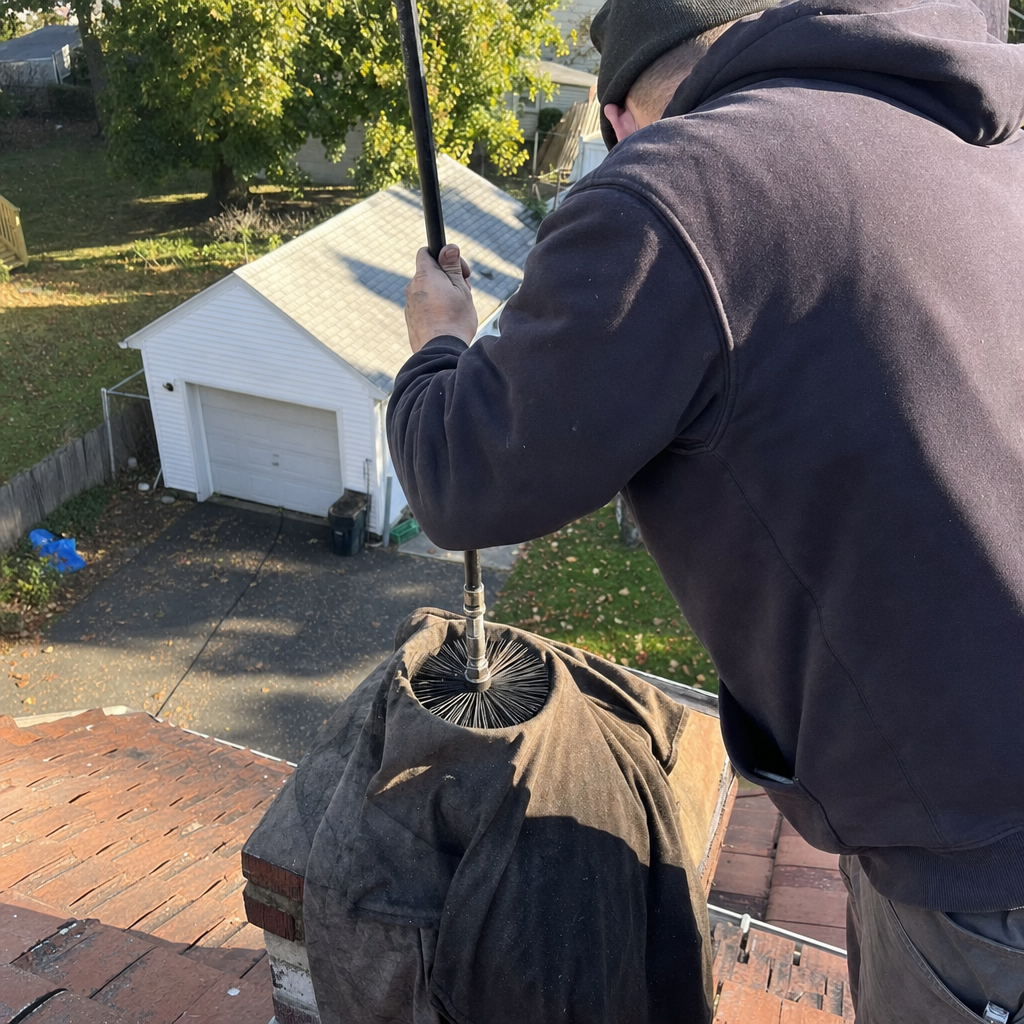
Signs Your Chimney Needs Cleaning in Connecticut — and the Ones You’ll Never See Without a Camera
The most reliable signs your chimney needs cleaning are smoke backing up into your living room, a persistent creosote odor even when the fireplace isn’t burning, and fires that struggle to start or stay lit. By the time you notice these, however, you’re already past the point where cleaning would have been preventive — you’re in reactive territory. In Connecticut’s climate, where chimneys sit idle from April through October and then get fired up hard in November, the dangerous buildup happens in the flue above your smoke chamber, completely invisible from your living room. Call (833) 719-7193 if you’re seeing any of these symptoms; we’ll get a camera up there and show you exactly what’s going on.
Why Waiting for “Signs” Is the Wrong Model
Every “signs you need a chimney cleaning” article on the internet lists the same five bullet points: smoke in the room, bad smell, black soot, animals making noise, and a weak draft. Here’s what bothers Anthony after eight years of reading Connecticut flues — by the time any of those show up, you’ve already got a problem that could have been prevented.
We get calls every October from homeowners in Woodbridge, Guilford, and the Litchfield Hills who lit their first fire of the season and suddenly noticed smoke pouring into the living room. They’ll tell us, “It was fine last year.” What they mean is, they couldn’t see a problem last year. The creosote was already there, layer by layer, from every green oak or unseasoned maple log they burned. Connecticut’s abundant wooded suburbs mean plenty of homeowners burn whatever fell in the yard — and green wood can deposit creosote at three to four times the rate of properly seasoned hardwood.
The truth? The section of your chimney that actually catches fire — the flue liner above the smoke chamber — is the one part you cannot see from inside your house. The firebox where you stack your logs? That’s the least problematic area. It’s designed to take direct flame. The clay tile flue liner or stainless steel liner running up through your attic and roof is where temperatures spike, where creosote glaze forms, and where a chimney fire starts as a slow burn you might not even realize is happening.
Anthony’s seen this pattern dozens of times: a Fairfield County colonial with an original clay tile liner, a homeowner burning mixed hardwood, and a flue that “looked fine” from below. Camera inspection reveals quarter-inch glazed creosote and hairline cracks in the tile joints. That’s not a cleaning anymore — that’s a liner conversation. And it’s completely preventable with annual inspection.
Homeowner-Observable Signs vs. Technician-Only Signs
We separate what you can detect from your living room versus what we find with a camera and trained eye. Both matter, but only one category keeps you ahead of real danger.
What You Might Notice Yourself
- Smoke entering the room — Indicates restricted airflow, often from creosote buildup or a blocked flue. In Connecticut, spring nesting season means squirrels, raccoons, and chimney swifts frequently block flues between April and October.
- Oily, black staining on firebox walls — Creosote condensation that’s advanced enough to seep back down. Usually means the flue above is heavily coated.
- Strong, acrid odor when humidity rises — Connecticut’s muggy July afternoons can make a dirty flue smell like an asphalt plant. The creosote absorbs moisture and off-gases.
- Visible soot or debris falling past the damper — Means buildup has reached critical mass and is physically shedding.
- Fires that start slowly or burn sluggishly — Restricted oxygen flow from a narrowed flue passage.
Here’s the thing: every one of these means you’re already behind. They’re late-stage signals. The chimney fire risk has been accumulating for months or years.
What We Find With a Camera — and Why These Matter More
Anthony runs a Chimney Cleaning & Sweep that includes full camera documentation because the critical issues are never visible from below. After 800+ jobs across Connecticut, these are the technician-level findings that actually predict safety outcomes:
- Stage 2 or Stage 3 creosote on flue walls — Stage 1 is powdery and brushes off. Stage 2 is crunchy, tar-like flakes. Stage 3 is glazed, hardened, and requires rotary removal or chemical treatment. Stage 3 is also where chimney fires start. Homeowners cannot distinguish these stages without looking up the flue with proper lighting.
- Mortar joint deterioration between clay tiles — Allows gases and heat to escape the flue path, potentially igniting surrounding framing. Common in pre-1980s Connecticut homes with original construction.
- Glazing at tile joints in older liners — The pattern Anthony watches for most: green or mixed wood burned in aging clay tile creates concentrated deposits at the joints, exactly where heat transfer is already compromised. This is the scenario that most often precedes our emergency chimney fire calls in New Haven, Hartford, and New London counties.
- Spalling or cracked flue tiles — Structural failure that requires liner replacement, not cleaning. We install DuraFlex and Olympia Chimney stainless steel liners when clay tile systems fail — the same products specified by chimney professionals nationwide, not hardware-store substitutes.
Anthony puts it this way: “I’d rather give you the straight answer on the roof than a comfortable one at the bottom of the ladder.” That means showing you the camera footage, pointing to the glazed creosote or cracked tile, and explaining exactly what you’re looking at — no padding, no scare tactics, just what we found and what it means for your safety.
Connecticut’s Hidden Chimney Risk: Spring Nesting Season
Here’s a local detail that generic “signs” articles never mention. Connecticut’s mix of mature suburbs and rural woodland creates prime habitat for animals that love chimney flues. From late March through June, we remove nests from chimneys in Madison, Ridgefield, Simsbury, and dozens of towns where wooded lots back up to colonial-era homes with tall, inviting flues.
A chimney that sat unused from April to October may have a complete blockage — twigs, leaves, a deceased squirrel, even a chimney swift nest protected by federal law during breeding season — that produces zero visible sign until you light that first November fire. The smoke backs up immediately. Or worse, the blockage restricts airflow enough that creosote deposits accelerate through the burning season without you realizing draft performance has degraded.
We’ve found complete flue blockages in homes where the homeowner swore the chimney “was working fine last winter.” The animal moved in in May. The chimney wasn’t fine — it was compromised for six months and nobody checked.
This is why we recommend inspection in late summer or early fall, before first fire, especially for:
- Homes surrounded by mature trees or adjacent to woodland
- Properties without chimney caps (we install Gelco and Famco caps as part of our Chimney Cleaning & Sweep and repair services)
- Vacation homes or second properties where the chimney sat idle all spring and summer
The “It Looks Fine From Here” Trap
Anthony hears this constantly on Connecticut job sites: “I can see up the chimney and it looks pretty clean.” The homeowner is peering past the damper, maybe with a flashlight, looking at the smoke chamber or the bottom few feet of flue.
Here’s why that’s misleading. Creosote doesn’t deposit evenly. Combustion gases cool as they rise, so the heaviest condensation happens higher in the flue — often in the section running through your attic or upper wall, where temperatures drop and gases slow. The bottom ten feet might look acceptable while the top fifteen feet carry a quarter-inch of glazed fuel. A chimney fire can start in that upper section, burn downward, and destroy your flue liner before you realize anything is wrong.
We’ve camera-inspected chimneys in Glastonbury and West Hartford where the visible firebox was nearly spotless and the flue above was coated with Stage 3 glaze. The homeowner had no idea. They were burning properly seasoned wood, maintaining their fireplace, and still accumulating dangerous deposits because of flue geometry and local temperature differentials they couldn’t observe.
Our inspection protocol includes full video documentation from firebox to cap. You see what Anthony sees. No trust required — just evidence.
What Annual Inspection Actually Prevents: Real Connecticut Examples
Eight years of chimney-only focus means we’ve seen patterns repeat across Connecticut’s housing stock. Here are specific scenarios from our work that illustrate why the preventive model outperforms waiting for signs:
The 1920s Hartford-area colonial with original clay tile. These liners were built for coal or older, less efficient fireplaces. Modern airtight wood stoves and inserts run cooler flue gases, which condense more creosote. Anthony finds glazed deposits in these systems at twice the rate of properly lined, modern installations. Annual cleaning catches Stage 1 buildup before it hardens to Stage 3.
The shoreline home in Old Saybrook or Stonington with salt air exposure. Exterior chimney structures deteriorate faster. Mortar joints in the crown wash out, water intrudes, and the freeze-thaw cycle of Connecticut winters spalls brick and damages liners. Our home inspection includes exterior condition assessment because a dirty flue is only one of several failure modes.
The “I only use it for ambiance” homeowner in Fairfield County. Occasional fires with damped-down airflow — flames for atmosphere rather than heat — produce the coolest, most creosote-heavy flue gases. These chimneys often surprise owners with heavy buildup because the usage pattern feels light.
In every case, the homeowners who avoid emergency calls are the ones on a scheduled annual cycle, not the ones reacting to symptoms.
Inspection vs. Cleaning: What You Actually Need
Not every chimney needs cleaning every year. Some need it more often. The only way to know is inspection first. Here’s how we structure the work:
| Service | What’s Included | Typical Range |
|---|---|---|
| Level 1 Inspection | Visual examination of accessible portions, no camera | $150–$250 |
| Level 2 Inspection with Camera | Full internal video scan, documentation, written condition report | $250–$400 |
| Chimney Sweep / Cleaning | Rotary or hand brushing of flue, debris removal, smoke chamber cleaning | $200–$350 |
| Heavy Creosote Removal (Stage 3) | Chemical treatment, rotary chains, multiple passes | $400–$700 |
| Chimney Cap Installation | Custom-fit cap, spark arrestor, animal screening | $300–$600 |
Most Connecticut homeowners in our service area fall into the Level 2 Inspection plus standard cleaning range, typically $350–$550 total when both are needed — see our Chimney Cleaning Cost in Connecticut, CT for full details. If inspection shows clean flue walls and sound structure, we don’t sell you a cleaning you don’t need. Anthony’s built his reputation on exactly that — eight years, one specialty, and the accountability of being the person who climbs your roof and signs the report.
Call (833) 719-7193 for exact pricing on your specific chimney. Estimates are free, and we’ll tell you honestly whether you need inspection, cleaning, or nothing this year.
FAQs
Affordable Chimney Cleaning & Sweep in Connecticut, CT typically runs $200–$350 for a routine sweep, while heavy creosote removal or systems with difficult access can reach $400–$700. The exact price depends on flue condition, liner type, and whether we find Stage 3 glazed deposits requiring chemical treatment. Call (833) 719-7193 for a free estimate — we’ll ask about your fireplace type, usage, and any symptoms you’re seeing to give you a firm number before we schedule.
Yes, in most cases we can complete cleaning immediately after inspection if the condition warrants it. Anthony carries rotary cleaning equipment, professional brushes, and HeatShield refractory products on his truck for common repair needs. About 70% of our Connecticut appointments that start as inspections convert to same-day cleaning when camera findings show buildup beyond safe levels. If we discover structural issues requiring liner replacement or rebuild, we’ll document everything and schedule the follow-up work with a clear proposal.
DIY chimney cleaning kits cost $30–$80 at hardware stores, but they reach only the bottom few feet of flue and cannot remove Stage 2 or 3 creosote safely. More importantly, without a camera inspection you’re cleaning blind — you cannot see the deposits that actually create fire risk in the upper flue. Anthony has cleaned chimneys where the homeowner “maintained” it annually with a store brush and the camera still showed dangerous glazing above the reachable zone. Professional cleaning includes documented inspection, proper disposal of carcinogenic creosote, and liability coverage for work performed. For most Connecticut homeowners, the professional route is the only one that actually addresses safety.
The National Fire Protection Association recommends annual inspection for all chimneys, with cleaning frequency determined by condition found. In Connecticut’s climate — with heavy winter usage, spring animal nesting, and freeze-thaw masonry stress — we find that wood-burning fireplaces used regularly need cleaning every 1–2 years, while gas systems may go 2–3 years between cleanings if inspection shows clear flue passages. The critical point: let inspection drive the schedule, not the calendar. Call (833) 719-7193 to set up your annual check — we’ll tell you whether this year is a cleaning year or a clear-pass year.
When to Stop Reading and Start Calling
If you’ve noticed smoke where it shouldn’t be, smelled creosote when the fireplace isn’t burning, or you’re staring at a chimney that hasn’t seen a professional since you bought the house, you’ve got enough information. The rest is a camera up the flue and an honest assessment from someone who’ll show you exactly what we’re seeing.
Premier Chimney Cleaning Connecticut offers no-pressure inspection and cleaning across the state — from the shoreline towns to the Litchfield Hills, Anthony Perez handles every job personally. If you’d rather have it looked at, call (833) 719-7193 for a free estimate.
Written by Anthony Perez, Owner & Lead Technician at Premier Chimney Cleaning Connecticut, serving Connecticut, CT.